Why x402 fits trading signal monetization
Traditional API billing models are fundamentally broken for autonomous AI agents. Legacy systems rely on human-initiated actions: clicking "subscribe," entering credit card details, or managing recurring invoices. These friction points are incompatible with high-frequency, low-latency trading environments where signals must be consumed and acted upon in milliseconds without human intervention.
x402 solves this by enabling frictionless, autonomous payments directly between AI agents and servers. As an open, neutral standard for internet-native payments, x402 absolves the internet's "original sin" by making payments possible between clients and servers at the protocol level x402.org. This means your trading signal endpoint can verify payment and deliver data in a single, atomic step.
For trading signal providers, this architecture shifts the burden from customer support to code. Instead of handling failed payments, churn, or invoice disputes, your endpoint simply validates the x402 token. If the payment is valid, the signal is delivered. If not, access is denied. This per-request model aligns perfectly with the variable demand of algorithmic trading, where agents may need burst access to premium data during high-volatility events rather than a flat monthly fee.
How the payment flow works for signals
When an AI agent requests a trading signal, the interaction follows a specific atomic sequence defined by the x402 standard. This mechanism replaces traditional subscription models with a direct, on-chain payment loop that ensures the signal provider is compensated before the data is delivered.
The process begins when the agent sends an HTTP request to the endpoint. Instead of returning the requested data immediately, the server responds with an HTTP 402 Payment Required status code. This response is not an error; it is a structured instruction set. It contains the necessary payment details, including the destination wallet address, the required amount in USDC, and the specific blockchain network (such as Base or Solana) where the transaction must occur. This step effectively turns the API endpoint into a payment gateway.
Once the agent receives the 402 response, it triggers its internal wallet to execute a USDC transfer. This is where the atomic nature of the transaction comes into play. The agent must send the exact amount specified in the headers. Because x402 V2 standardizes how networks and assets are identified, the agent can route the payment across multiple chains without custom logic, ensuring the signal provider receives the stablecoin value directly.
After the transaction is broadcast, the agent waits for on-chain confirmation. This verification step is critical for preventing double-spending and ensuring the payment is final. Once the blockchain confirms the transfer, the agent retries the original request, this time including a cryptographic proof of payment in the request headers. The server validates this proof against the blockchain state. If the payment is verified, the server releases the trading signal data. If the proof is invalid or the payment is missing, the server returns another 402, and the cycle repeats.
This flow ensures that data and payment are tightly coupled. The agent cannot access the signal without paying, and the provider cannot withhold the signal without losing the payment. It creates a trustless environment where the infrastructure itself enforces the transaction terms.
The agent sends an HTTP GET request to the signal endpoint. The server responds with a 402 status code, providing the payment amount, USDC contract address, and destination wallet in the response headers.
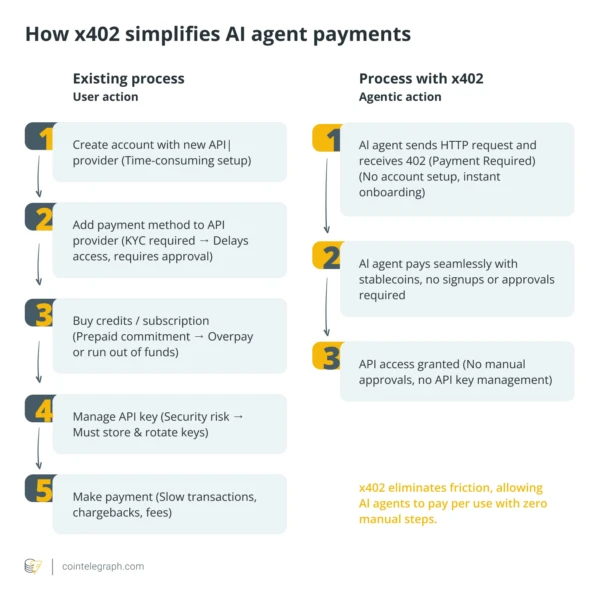
The agent’s wallet initiates a USDC transfer to the specified address. The agent monitors the blockchain for confirmation, ensuring the transaction is recorded and irreversible.
The agent attaches a cryptographic proof of payment to a new request. The server validates this proof against the blockchain. If valid, the signal data is returned; if not, the 402 cycle repeats.
This atomic handshake is what makes x402 suitable for high-frequency AI trading signals. Unlike traditional APIs that require pre-approved tokens or API keys, x402 ensures that every single data pull is backed by immediate, verifiable liquidity. This reduces counterparty risk and allows signal providers to monetize data in real-time, per-request, without managing complex billing infrastructure.
Infrastructure requirements for sellers
Implementing x402 for AI trading signals requires shifting from traditional API key authentication to a payment-header-based architecture. This change allows your server to verify on-chain payments before delivering data, creating a frictionless experience for autonomous agents. The core stack relies on Coinbase CDP for wallet management, Circle for USDC stability, and standard server-side logic to parse x402 headers.
Wallet Management and Server Logic
Your backend needs a way to receive and verify USDC payments without manual intervention. Coinbase CDP provides the infrastructure to generate and manage hot wallets for your service. When an AI agent calls your endpoint, it includes an x-payments-amount and x-payments-chain header along with a transaction hash. Your server must validate this transaction on-chain to confirm the payment was received before returning the trading signal data.
This process replaces static API keys with dynamic, pay-per-use access. The server logic becomes a gatekeeper that checks the blockchain state rather than just validating a secret token. This ensures that only paying agents receive your high-value market data.
Stablecoin Support with USDC
For trading signals, speed and predictability matter. USDC is the preferred currency for x402 transactions because it operates on stable value rails. Circle’s integration with x402 allows agents to pay in real-time using their on-chain wallets. This eliminates the latency and fees associated with traditional payment processors like Stripe, which are often blocked or impractical for autonomous AI interactions.
The x402 protocol standardizes how these payments are identified across different chains, including Base and Solana. This means your infrastructure can handle payments from agents using various blockchain environments without needing custom logic for each network.
Comparison: API Keys vs. x402 Headers
Traditional API keys are static and hard to revoke if compromised. x402 headers are tied to specific transactions, making every access event traceable and payable. This shift enables new business models where agents pay only for the exact data they need.
| Feature | Traditional API Key | x402 Payment Header |
|---|---|---|
| Authentication | Static secret token | On-chain payment verification |
| Access Control | Manual revocation | Automatic expiration per transaction |
| Agent Compatibility | Low (requires human setup) | High (native for AI agents) |
| Currency | Usually fiat/credit | USDC and other stablecoins |
Structuring pricing for AI trading signals
When building an x402 endpoint for trading signals, you are not just selling data; you are selling the latency and reliability of that data. Unlike traditional SaaS subscriptions, micro-payment models require pricing structures that account for the high frequency of agent requests. The goal is to align the cost of the signal with the value it provides to the trading algorithm, ensuring that the overhead of blockchain transactions does not erode the profit margin.
Per-request pricing
The most straightforward model is charging a fixed fee per signal. This works well for sporadic or on-demand queries where the agent only needs a signal when specific market conditions are met. Because x402 handles the payment logic natively, you can set tiny thresholds, such as $0.001 per request. This is ideal for high-frequency trading bots that need real-time price feeds but only when volatility spikes.
Tiered volume pricing
For more consistent data streams, tiered pricing encourages higher usage. You might offer a base rate for the first 10,000 requests per day and drop the price for subsequent volumes. This rewards heavy users while protecting your infrastructure from abuse. It also simplifies budgeting for trading firms that need predictable costs for their algorithmic strategies.
Volume-based bundles
Another approach is selling bundles of signals, such as a package of 1,000 requests for a discounted rate. This reduces the number of on-chain transactions required, lowering gas fees and network congestion. It is particularly effective for backtesting agents that need large datasets rather than real-time feeds.
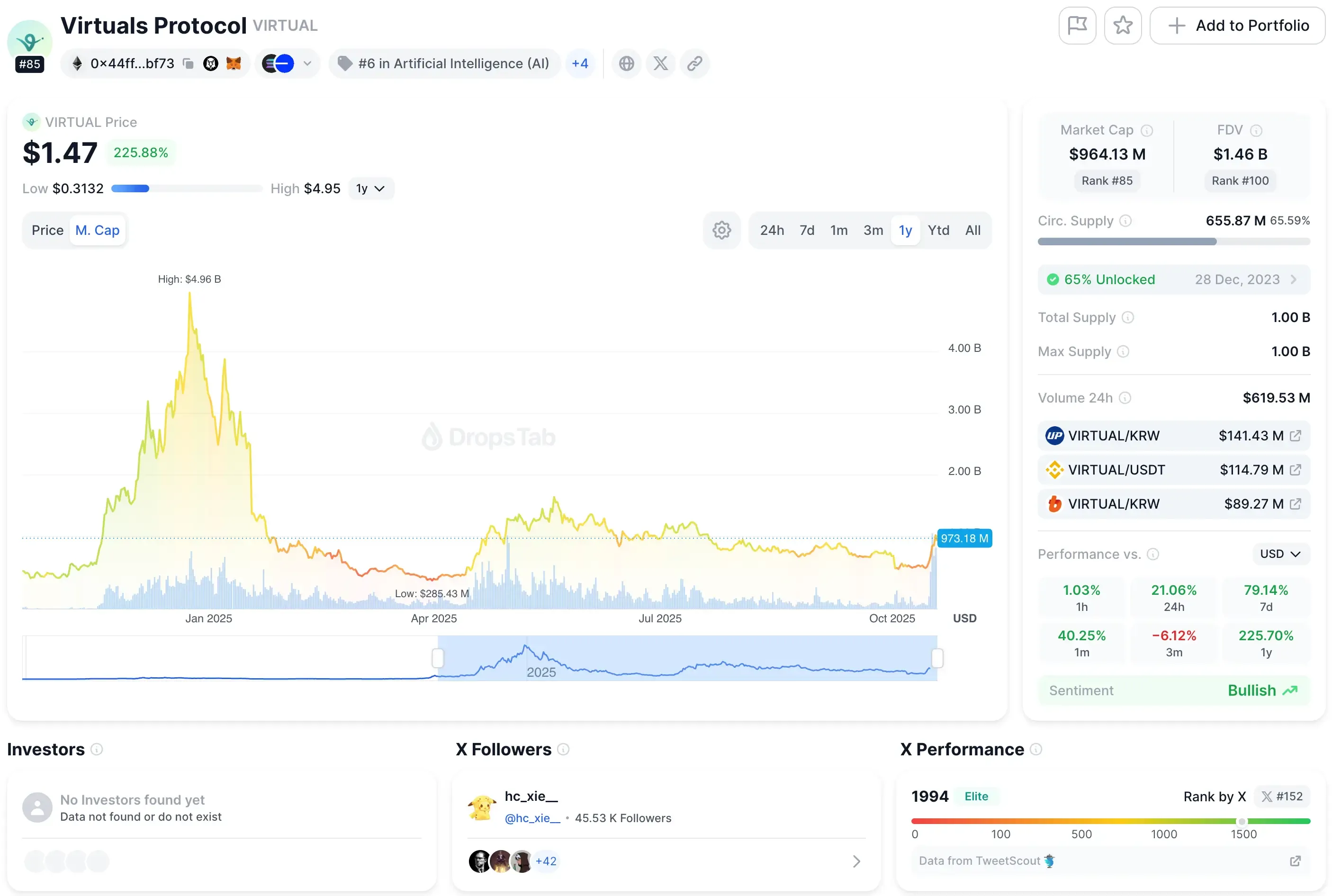
To contextualize these micro-thresholds, consider the current value of stablecoins used in these transactions. A small fluctuation in the underlying asset can impact the real-world cost of a single signal request.
Common Pitfalls in Agent-Commerce Setup
Building an x402 endpoint for AI trading signals requires more than just writing the API logic; you must engineer for the reliability of autonomous financial agents. When latency spikes or network congestion hits, the difference between a profitable trade and a failed execution is measured in milliseconds. If your endpoint doesn't handle these hiccups gracefully, your AI agent will simply time out, leaving your strategy exposed to market volatility.
Latency and Signal Freshness
Trading signals are time-sensitive assets. An x402 endpoint that takes too long to process a payment and return data effectively serves stale information. For high-frequency or algorithmic strategies, even a 500ms delay can erode edge. Ensure your infrastructure prioritizes low-latency responses, perhaps by caching non-critical metadata while keeping the core signal path lean. If your endpoint is sluggish, agents will abandon it for faster alternatives, regardless of signal quality.
Failed Retries and Idempotency
AI agents are persistent. If a payment transaction fails due to a temporary network glitch, the agent will retry. Without proper idempotency checks, your endpoint might charge the agent multiple times for the same signal or return duplicate data. This not only frustrates the user but can also corrupt your analytics. Implement strict idempotency keys in your x402 implementation so that retries are safe and deterministic.
Wallet Connectivity Hurdles
The friction often lies in the wallet connection. Agents need to seamlessly interact with wallets like Coinbase CDP or other supported providers. If your endpoint doesn't handle various wallet signatures or chain-specific quirks (especially with multi-chain x402 V2 support), the payment flow breaks. Test extensively with different wallet types and chain environments to ensure the handshake between your API and the agent's wallet is robust and error-free.
Launch checklist for x402 endpoints
Before sending your AI trading signals to agents, verify these five integration points. The x402 standard requires precise HTTP compliance and wallet readiness to ensure seamless machine-to-machine commerce.
Your API must return a 402 Payment Required status with a valid x-payment header when the client lacks funds. This header contains the payment URI and amount, allowing agents to process the transaction before accessing the endpoint.

Test your endpoint against a Coinbase CDP wallet to ensure the payment routing works correctly. The x402 protocol relies on standard ERC-20 transfers, so verify that your contract can receive USDC from any compatible EVM address.
Agents will not interact with your endpoint if the associated wallet has insufficient USDC for the transaction fee. Maintain a buffer to cover gas costs and ensure the payment amount matches your signal pricing exactly.
Network congestion can cause transient failures. Configure your endpoint to handle retry attempts gracefully, ensuring that agents can re-attempt payment without triggering duplicate charges or losing signal data.
Use a real AI agent framework to send requests and verify the end-to-end flow. This confirms that your 402 headers are parsed correctly and that the signal data is delivered only after successful payment confirmation.
Questions about x402 and trading signals
What is the x402 V2 protocol?
x402 V2 standardizes how networks and assets are identified, creating a single payment format that works across chains and with legacy payment rails. Key upgrades include multi-chain support by default, allowing stablecoins and tokens on Base, Solana, and new L2s without custom logic. This simplifies the infrastructure for AI trading signals that require automated, cross-chain settlement.
What is the x402 ecosystem?
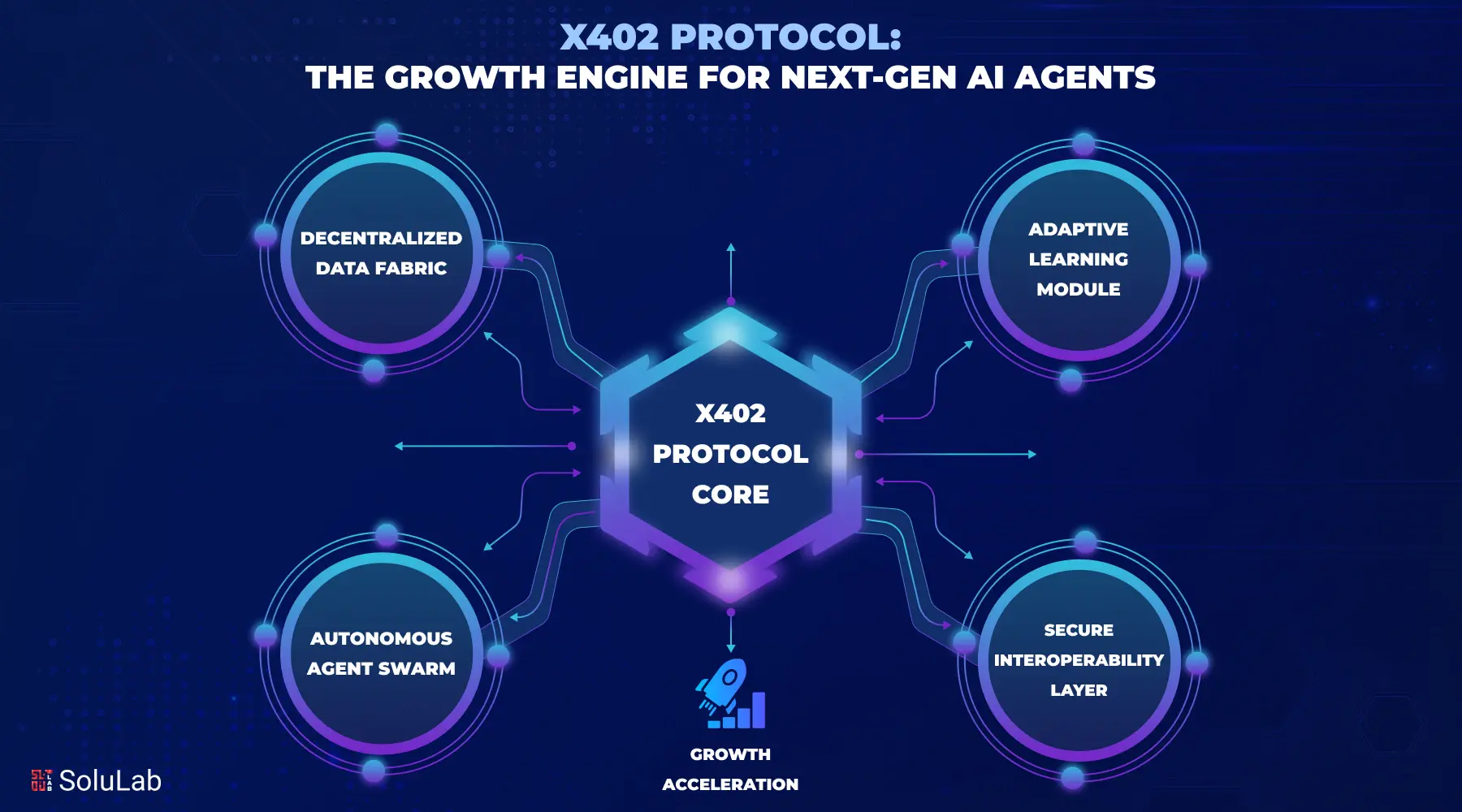
The x402 ecosystem is an open, neutral standard for internet-native payments. It enables direct, programmatic transactions between clients and servers, empowering agentic payments at scale. For AI trading, this means bots can autonomously purchase data or execute trades using x402-secure endpoints without manual intervention.
How does x402 handle AI agent payments?
x402-secure is specifically designed for transactions involving autonomous AI agents. It transparently integrates pre-payment risk checks to ensure that the AI agent has sufficient funds and the right permissions before executing a trade or data request. This adds a layer of security essential for high-stakes algorithmic trading.
No comments yet. Be the first to share your thoughts!