Why x402 matters for trading data
Traditional API billing models are built for human users, not autonomous code. When an AI agent needs real-time market data to execute a trade, it cannot navigate CAPTCHAs, log into dashboards, or manage recurring subscription renewals. The friction of human-in-the-loop billing creates latency that destroys arbitrage opportunities and makes micro-transactions economically unviable.
x402 Endpoints for AI Trading Signals solve this by enabling machine-to-machine payments directly within the HTTP protocol. An AI agent can request a signal, pay a fraction of a cent in crypto, and receive the data instantly, all without human intervention. This transforms trading data from a static subscription product into a dynamic, on-demand utility.
The standard abstracts away the complexity of blockchain interactions. For a trading algorithm, the endpoint looks like a standard API call. Behind the scenes, x402 handles the payment verification, ensuring the agent has sufficient funds before delivering the signal. This seamless integration is critical for high-frequency strategies where every millisecond counts.
By removing the need for credit card processors or manual invoice management, x402 enables a new class of AI-driven trading tools. These tools can now operate with true autonomy, scaling their data consumption based on market volatility rather than fixed monthly budgets. This shift from static access to pay-per-use is the infrastructure layer that makes autonomous AI trading viable at scale.
How the x402 V2 protocol works
The x402 V2 protocol standardizes how AI agents and servers exchange value. It transforms the HTTP response into a payment instruction, allowing any endpoint to accept on-chain payments without complex integration. This approach removes the friction of traditional gateways, making microtransactions for AI trading signals practical and immediate.
Multi-chain standardization
V2 solves the fragmentation of blockchain payments by supporting multiple networks out of the box. It handles asset identification across Base, Solana, and other Layer 2s using a single, unified format. An endpoint doesn't need custom logic for each chain; the protocol normalizes the transaction details so the server can process payments regardless of the underlying network.
The client-server-facilitator model
The transaction flow relies on three distinct roles:
- Client: The AI agent or user requesting the signal. It initiates the payment request.
- Server: The endpoint providing the trading data. It responds with a 402 status code if payment is required, including a payment instruction.
- Facilitator: A neutral third-party service that routes the transaction. It ensures the payment reaches the correct wallet on the correct chain without the client needing to manage private keys or gas fees directly.
This model keeps the server stateless and the client simple. The facilitator handles the complexity of bridging or swapping, allowing the AI agent to focus on executing trades rather than managing blockchain interactions.
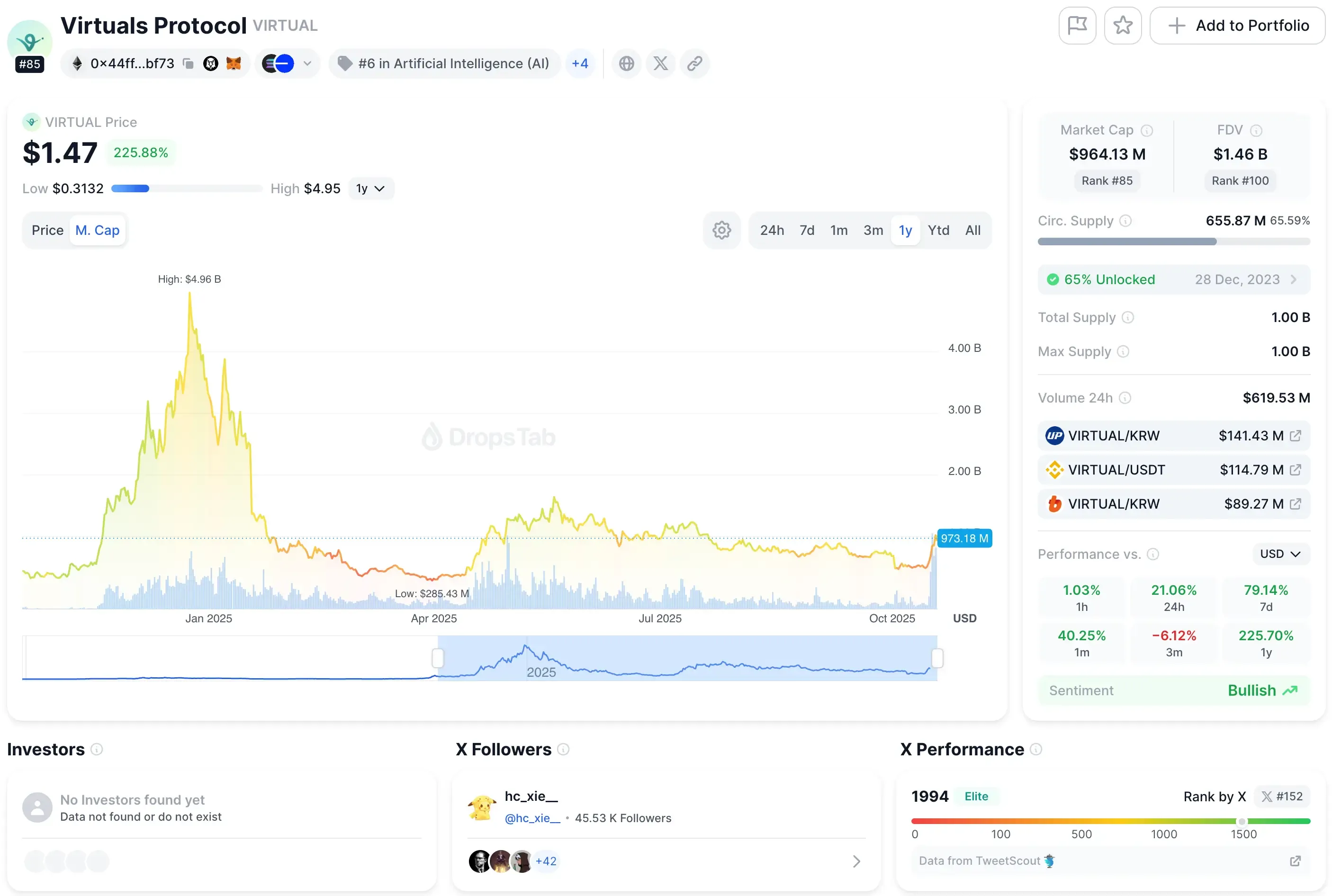
Contextual market data
Since x402 V2 primarily facilitates payments in stablecoins like USDC, understanding the underlying asset's performance is relevant for cost estimation. The chart below shows recent USDC price action, which remains pegged to the dollar but fluctuates slightly against major assets.
Integrating x402 Endpoints for AI Trading Signals
Implementing x402 Endpoints for AI Trading Signals requires a precise sequence: configuring your API to recognize payment intents, validating the cryptographic proof of payment, and serving data only after confirmation. This process allows AI agents to pay for market data using USDC without human intervention.
When an AI agent or client first requests your endpoint, your server should respond with a 402 Payment Required status. Crucially, include the x-x402-payment-url header in this response. This header points the client to the specific on-chain transaction details needed to settle the debt. According to the Coinbase Developer Documentation, this step establishes the payment intent before any data is released.
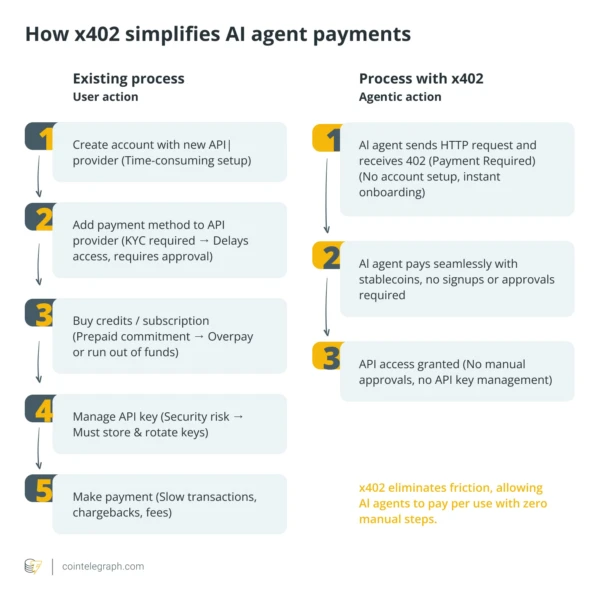
Once the client attempts to access the resource again, they will attach a x-x402-payment-proof header containing the transaction signature. Your backend must verify this proof against the blockchain. This validation ensures the payment was actually made and corresponds to the specific endpoint and amount requested. Do not trust the header blindly; always verify the on-chain state.
After successful validation, respond with a 200 OK status and the requested trading signal data. This data can be structured JSON containing real-time price feeds, technical indicators, or execution alerts. Because the payment is settled in USDC, your revenue stream is immediate and currency-neutral. The client receives the data only after the cryptographic proof is confirmed, ensuring a fair exchange for your computational resources.
x402 Endpoints vs. Traditional API Billing
Legacy API billing models were built for human users with credit cards, not for autonomous agents executing micro-transactions. Integrating x402 endpoints for AI trading signals replaces this friction with a protocol designed for machine-to-machine commerce. The shift moves billing from a post-hoc administrative task to a real-time, native component of the API response.
Traditional gateways like Stripe or AWS billing introduce latency and friction that make high-frequency trading signals impractical. x402 standardizes these payments using cryptographic proofs and stablecoins, enabling instant settlement without the need for pre-funded accounts or complex invoicing workflows.
The following comparison highlights why x402 is the superior infrastructure for AI-driven financial data.
| Feature | x402 Endpoints | Stripe / AWS |
|---|---|---|
| Settlement Speed | Instant (on-chain) | 2-3 business days |
| Chargeback Risk | None (cryptographic proof) | High (dispute-prone) |
| Agent Compatibility | Native (headless) | Poor (requires UI) |
| Micro-transaction Cost | Low (gas + protocol) | High (flat fees) |
By eliminating chargebacks and enabling headless payments, x402 allows AI agents to purchase trading signals autonomously. This creates a more efficient market for real-time data, where access is granted instantly upon payment confirmation rather than after a manual billing cycle.
Building a robust trading signal infrastructure
Exposing paid endpoints for high-stakes financial data requires more than just a functional API; it demands a foundation of reliability and security. When your x402 Endpoints for AI Trading Signals guide comes into play, the infrastructure must handle autonomous agent requests without friction or failure. The x402 protocol simplifies the payment layer, but the surrounding architecture must ensure that the signal itself is delivered accurately and securely.
Rate limiting is the first line of defense. Without it, a single misconfigured agent or a malicious actor can flood your endpoint, degrading service for paying clients. Implement strict per-key limits and consider exponential backoff responses. This protects your server resources and ensures that legitimate trading signals are prioritized during high-traffic periods. For AI agents, predictable latency is just as important as availability.
Security extends beyond authentication. Since x402 handles pre-payment, you must validate that the payment context is intact before processing the request. Use header verification to ensure the Payment-Policy and related tokens are valid and not replayed. Additionally, implement fallback mechanisms for edge cases where the payment gateway is temporarily unreachable. A well-architected system handles these failures gracefully, preventing data loss or inconsistent state for your trading clients.
Frequently asked questions about x402
What is the x402 V2 protocol?
x402 V2 standardizes how networks and assets are identified, creating a single payment format that works across chains and with legacy payment rails. Key upgrades include multi-chain support by default, enabling stablecoins and tokens on Base, Solana, and other chains without custom logic.
What is the x402 ecosystem?
x402 is an open, neutral standard for internet-native payments. It aims to absolve the Internet's original sin by natively making payments possible between clients and servers, creating win-win economies that empower agentic payments at scale.
How does x402-secure support AI trading signals?
x402-secure is specifically designed for transactions involving autonomous AI agents. It transparently integrates pre-payment AI agent risk checks to ensure that trading signals are paid for securely and reliably before execution.
No comments yet. Be the first to share your thoughts!