Why x402 fits agent trading
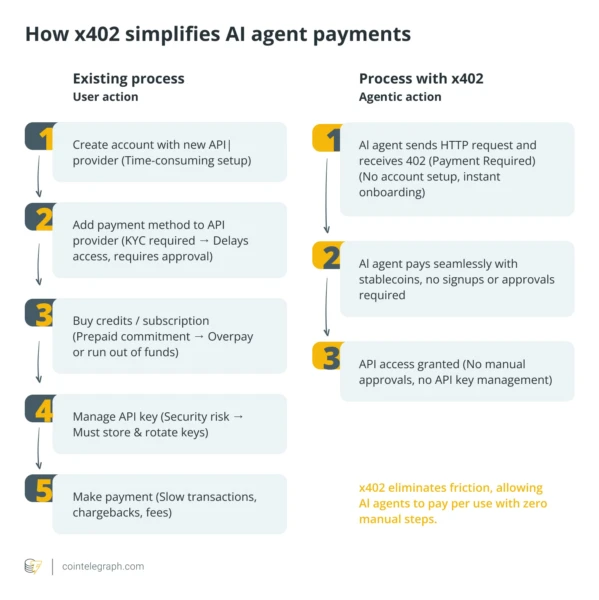
Traditional API billing models are built for human users, not autonomous software. When you integrate a standard REST API for AI trading signals, you are usually relying on credit card tokens, subscription tiers, or post-hoc invoicing. These mechanisms require manual intervention, frequent authentication checks, and complex reconciliation logic that breaks down when requests happen at machine speed. An AI agent cannot pause its strategy to enter a credit card number or approve a recurring charge every time it needs real-time market data.
This friction creates a bottleneck for agent-driven trading. If the payment layer is slow or requires human approval, the agent’s latency increases, and its ability to react to fleeting market opportunities diminishes. Worse, the security model is often misaligned; APIs protected by static API keys are vulnerable to theft, and once a key is compromised, the financial damage can be significant before the provider detects the anomaly.
The x402 V2 protocol basics
x402 V2 is not just an upgrade; it is the standardization of how AI agents pay for data and services on-chain. Before V2, integrating payments required custom logic for every blockchain. V2 solves this by creating a single, universal payment format that works across networks, from Base to Solana and various L2s.
At its core, x402 addresses the "Internet's original sin": the inability for clients and servers to transact natively. By embedding payment signals directly into the HTTP response, it allows AI trading signals to be delivered via standard API calls, with the payment handled automatically in the background. This makes x402 endpoints for AI trading signals practical for high-frequency, low-latency use cases where traditional banking rails are too slow.
The protocol supports standardized stablecoins like USDC, which is critical for trading bots that need predictable value. Circle has integrated with x402 to enable autonomous payments, allowing agents to hold USDC in wallets and pay for API access in real time. This removes the friction of manual approvals and allows for truly autonomous economic activity.
For developers building trading infrastructure, this means you no longer need to maintain separate payment gateways for different chains. The x402 V2 spec handles the complexity of network identification and asset routing, letting you focus on the signal quality rather than the payment plumbing. You can think of it as the HTTP standard for money—simple, universal, and built for the open web.
Integrating endpoints for signals
Turning an AI trading signal into a paid x402 endpoint requires a specific sequence of wallet setup, header injection, and response handling. The goal is to make your API callable by AI agents that can automatically approve small payments in USDC.
Start by funding a wallet with USDC on a supported chain like Base. The agent needs a way to pay you, and USDC is the standard for these micro-transactions. Use a wallet that can sign transactions, such as Coinbase Wallet or any EVM-compatible wallet with API access. Ensure the wallet address is visible to your backend so it can verify incoming payments.
Your endpoint must check for the x-api-key and Authorization headers. The x-api-key is the agent's wallet address, and the Authorization header contains the signature. If these are missing or invalid, the agent cannot prove it has paid. You can use the Coinbase Developer Platform (CDP) SDK to validate these signatures against the blockchain state. This step ensures that only paying agents get access to your trading signals.
If an agent hasn't paid, return a 402 Payment Required status code. Include a Pay header with the payment link and amount. The agent's middleware will catch this, prompt the user (or auto-approve if configured), and retry the request. This is the core of the x402 protocol: the server tells the client how much to pay, and the client pays before proceeding. This flow is seamless for the user and automatic for the agent.

Before delivering the signal, verify that the payment transaction is confirmed on the blockchain. Use a block explorer or a library like ethers.js to check the transaction status. This prevents double-spending and ensures the payment is final. Once verified, deliver the trading signal data. This step is critical for maintaining trust in your service, as it guarantees that you only provide value for received payment.
To visualize the network activity surrounding these transactions, you can monitor USDC flow on Base.
This setup allows your AI trading service to operate autonomously, charging agents for every signal they fetch. By following these steps, you create a robust, pay-per-use model that scales with demand without manual intervention.
Pricing models and risk management
When selling AI trading signals, you are no longer bound by the rigid monthly subscription cycles of traditional SaaS. With x402 Endpoints for AI Trading Signals, you can adopt a per-request pricing model that aligns costs directly with usage. An AI agent calling your market data API pays USDC per request, immediately retrieving liquidity data without the friction of human invoicing or credit card processing [src-serp-6]. This micro-transaction approach works well for high-frequency data where users only need specific snapshots rather than continuous access.
However, high-frequency trading data comes with significant latency and cost risks. If your endpoint charges per call, a bot making thousands of requests per second could incur unexpected fees or trigger rate limits that degrade performance. You must balance granularity with volume. A hybrid model often works best: charge a small base fee for API access and then apply x402 micro-payments for premium, real-time signal updates that exceed standard limits.
| Feature | Traditional API Billing | x402 Agent Payments |
|---|---|---|
| Payment Method | Credit Card / Invoice | USDC / Stablecoin |
| User Setup | Account creation required | No account needed |
| Billing Granularity | Monthly / Annual | Per-request / Micro |
| Latency Impact | Low (pre-auth) | Minimal (on-chain) |
To mitigate the risk of high-frequency data abuse, consider implementing rate limiting at the protocol level. Since x402 is an HTTP-native payment protocol, it enables AI agents to make programmatic payments without accounts or credit cards [src-serp-8]. This means you can verify payment before delivering the signal, ensuring that only paying agents receive your most valuable data. This reduces the risk of free-riding bots draining your resources while keeping the user experience seamless for legitimate traders.
Ecosystem tools and wallets
Running x402 endpoints for AI trading signals requires more than just protocol logic; it demands a reliable financial plumbing layer. The ecosystem has coalesced around a few key infrastructure partners that make autonomous payments feasible for developers and traders alike. These tools bridge the gap between abstract API calls and actual on-chain settlement.
Circle provides the foundational liquidity layer. By integrating Circle Wallets with x402, AI agents can hold USDC and execute pay-per-use transactions in real time. This setup allows trading signals to be gated behind micro-payments, ensuring providers get paid instantly without the friction of traditional banking rails. For traders, this means seamless access to high-value data streams using stablecoins as the primary currency.
Coinbase and Eco further streamline the developer experience. Coinbase’s infrastructure offers robust wallet solutions that simplify key management for automated agents, while Eco provides specialized documentation and support for integrating x402 into existing AI architectures. Together, these partners create a neutral, open standard where internet-native payments happen directly between clients and servers, removing the need for custom payment logic on every endpoint.
Implementation checklist for sellers
Before routing AI trading signals to production, verify that your API correctly handles the x402 payment flow. This ensures your buyers—whether human traders or autonomous agents—can pay seamlessly without friction or errors.
Ensure your server accepts the Authorization header containing the signed wallet message. Test connectivity by simulating a request from a compatible wallet like Coinbase Wallet or MetaMask to confirm the signature validates against the public key.
Implement logic to return a 402 Payment Required status code when payment is missing or invalid. Include a Payment-Required header with the payment URI and instructions. This signals the client to initiate the transaction before accessing the trading data.
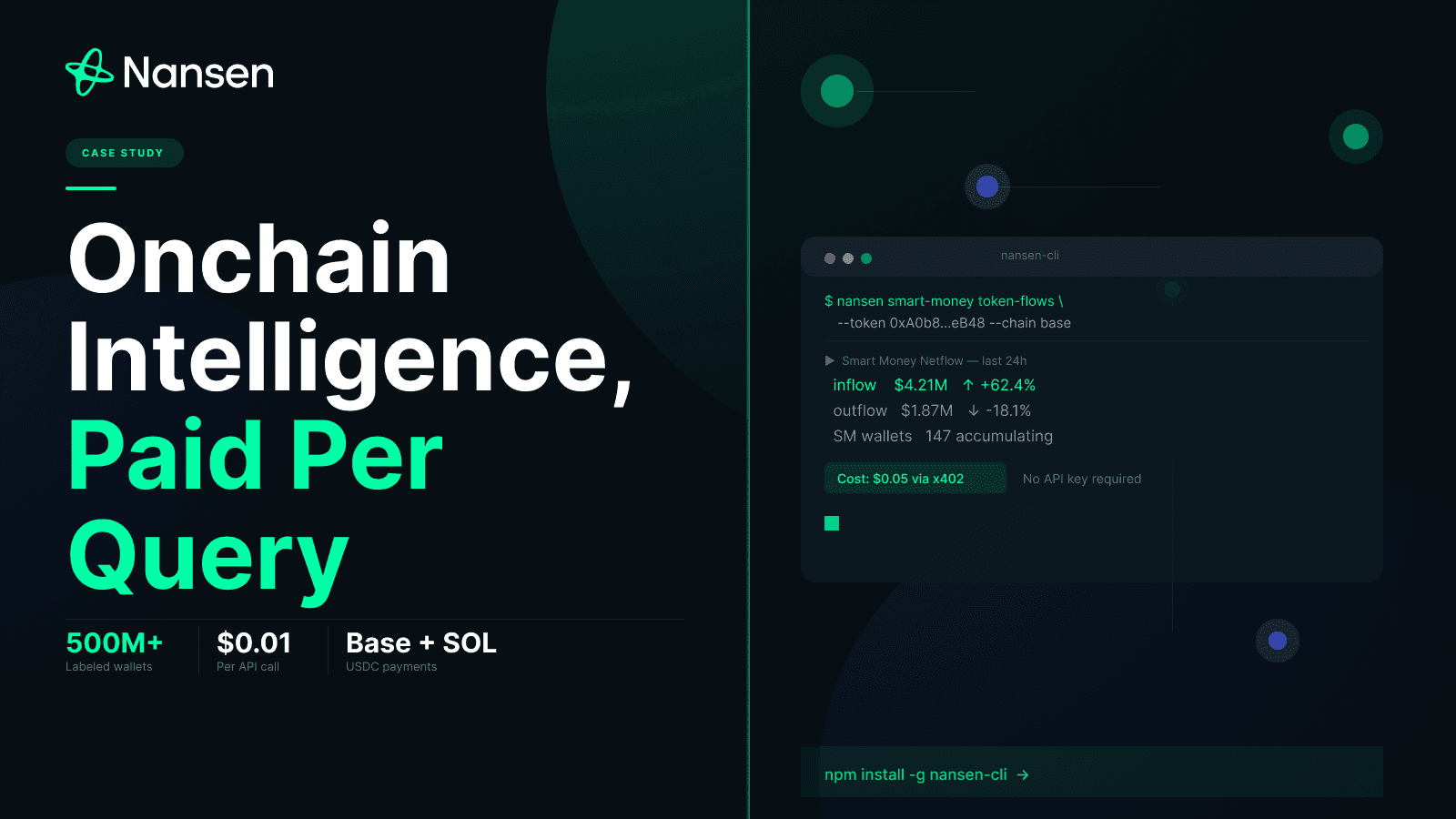
Once a payment is detected, verify the transaction on-chain (e.g., on Base or Solana) to confirm it has reached the required confirmation depth. Only then should you serve the AI-generated trading signals or API data to the requester.
For detailed integration steps, refer to the Coinbase x402 Seller Quickstart. This guide covers the specific code snippets needed to handle headers and validate signatures across different programming languages.
Frequently asked: what to check next
What is the x402 V2 protocol?
x402 V2 standardizes how networks and assets are identified, creating a single payment format that works across chains and with legacy payment rails. It supports stablecoins and tokens across Base, Solana, and new L2s without requiring custom logic, making it easier to integrate x402 endpoints for AI trading signals.
What is the x402 ecosystem?
x402 is an open, neutral standard for internet-native payments. It absolves the Internet's original sin by natively making payments possible between clients and servers, creating win-win economies that empower agentic payments at scale. This makes it ideal for automated trading environments.
How does x402 secure AI agent transactions?
The x402-secure variant is specifically designed for transactions involving autonomous AI agents. It transparently integrates pre-payment AI agent risk checks to ensure that automated trading signals are paid for securely before execution.
Which blockchains and stablecoins does x402 support?
x402 supports a wide range of assets and networks, including major stablecoins on Base, Solana, and other Layer 2 solutions. This flexibility allows AI trading bots to accept payments in the asset most convenient for the user.
Who is building with x402?
The ecosystem is growing rapidly with developers from major web3 infrastructure providers, including Eco and Coinbase, building support into their platforms. This official backing ensures that x402 endpoints for AI trading signals are robust and widely accessible.
No comments yet. Be the first to share your thoughts!