Why x402 fits trading infrastructure
Traditional API access relies on human-authenticated keys or OAuth tokens, creating friction when AI agents need to consume high-frequency market data. These legacy systems require manual provisioning, complex permission scopes, and often fail to handle micro-transactions efficiently. The x402 standard resolves this by embedding payment verification directly into the HTTP response code, allowing machines to settle costs instantly without human intervention.
For AI trading signals, latency is the primary constraint. When an agent requests a liquidity snapshot or a price feed, it cannot wait for a third-party payment gateway to approve a transaction. x402 enables cryptographic settlement at the protocol level. An agent can pay USDC per request and immediately retrieve the data, turning every API call into a self-contained economic event. This shift from static keys to dynamic, machine-to-machine commerce is essential for scalable agent infrastructure.
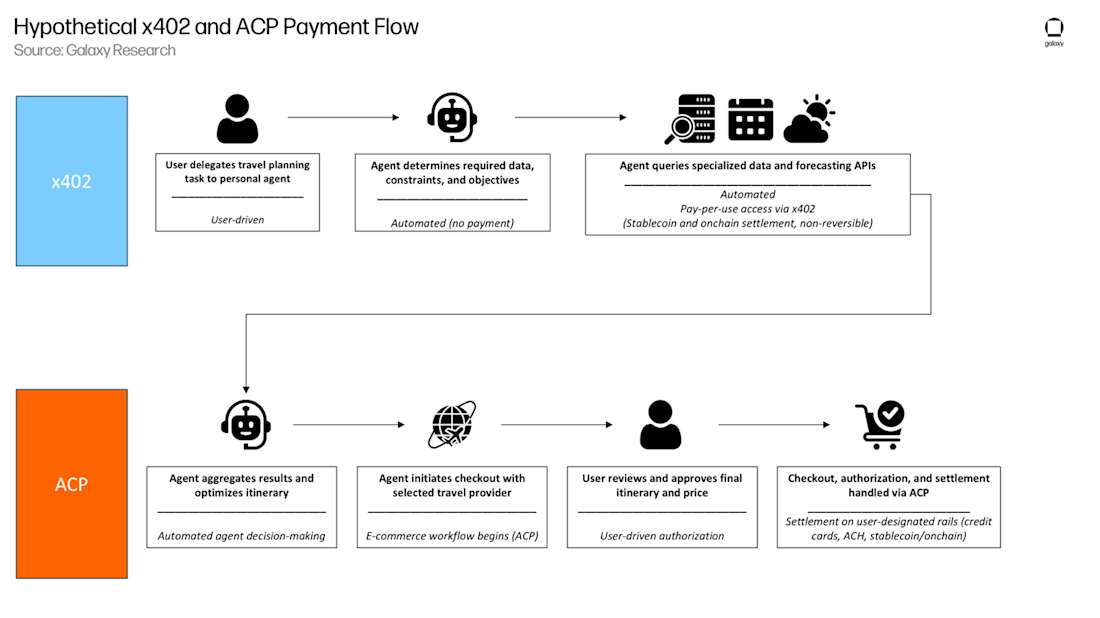
Galaxy Research notes that standards like x402 enable agentic payments, effectively making AI agents economic actors. This capability allows blockchains to quietly power the intersection of crypto and AI, removing the need for centralized billing systems. By eliminating the overhead of subscription management and invoice processing, x402 provides the low-latency, high-throughput foundation required for real-time trading algorithms.
The x402 payment flow for signals
When an AI agent requests a trading signal from a paid endpoint, the server doesn't immediately return the data. Instead, it follows a strict sequence defined by the x402 protocol: reject, pay, verify, and deliver. This flow ensures that the signal provider receives compensation before revealing proprietary market insights.
The agent sends a request for a signal. The server responds with an HTTP 402 status code, indicating payment is required. This response includes headers detailing the payment amount, the accepted currency (typically USDC), and the wallet address or payment intent details. This is the initial "gate" that stops the data flow until payment is settled.
The AI agent receives the 402 response and initiates a transaction. It transfers the specified amount of USDC to the provider's wallet. This step often involves interacting with a blockchain or a payment facilitator to ensure the transaction is broadcast. The agent waits for on-chain confirmation or a facilitator's receipt before proceeding.
Once the payment is broadcast, the server monitors the blockchain or payment facilitator for confirmation. It validates that the correct amount of USDC has arrived in the designated wallet. This verification step is critical to prevent fraud; the server will not deliver the signal until the payment is irrevocably confirmed.

With payment verified, the server retries the original request (or the agent resends it with a payment receipt header). The server then returns the trading signal data in the response body. The agent can now execute its strategy based on the fresh, paid-for market intelligence.
This flow is automated and machine-readable, allowing AI agents to purchase high-value data without human intervention. The reliability of this system depends on the speed of blockchain confirmations and the accuracy of the server's verification logic.
Connecting x402 to Market Data APIs
Integrating x402 into your trading infrastructure requires shifting from traditional API key validation to on-chain payment verification. Market data providers—especially those offering real-time order book depth or low-latency signals—often restrict access to authenticated users. With x402, the authentication step doubles as the payment step. The agent sends a signed transaction to the provider's endpoint, and the provider validates the signature and blockchain state before returning the data.
Handling Headers and Signatures
The implementation starts with the HTTP request. Instead of carrying an Authorization: Bearer <key> header, the client must include an x-pay header containing the payment proof. This proof is typically a signed message or a transaction hash that references the specific signal or data package requested.
When building the request, ensure your agent's SDK handles the following:
- Payload Construction: Define the exact data fields required (e.g.,
symbol,interval,depth). - Signature Generation: Sign the payload using the agent's private key. This signature proves the agent has the funds and intent to pay.
- Header Injection: Add the
x-payheader with the signature or transaction ID.
Most x402-compliant providers expect the signature to be valid within a short time window (e.g., 5 minutes) to prevent replay attacks. If the signature is expired or invalid, the provider returns a 401 Unauthorized or 402 Payment Required status code.
Validating Responses and Managing State
Once the request is sent, the provider's server validates the on-chain payment. This validation happens asynchronously in some architectures, meaning you might receive a 202 Accepted response while the transaction is being confirmed. In high-frequency trading scenarios, this latency can be a bottleneck. For real-time signals, look for providers that support instant finality or sidechain settlements.
On the client side, your agent must manage state carefully. If a payment fails due to insufficient funds or a network glitch, the agent should retry with a new signature rather than reusing the old one. Keep a local ledger of recent transactions to avoid accidental double-spending and to reconcile any discrepancies in signal delivery.
Comparison: Traditional API vs. x402
The shift to x402 changes how you manage access and billing. Traditional APIs rely on subscription keys or usage-based billing handled off-chain. x402 moves this to on-chain, enabling microtransactions and agent autonomy.
| Feature | Traditional API | x402 Protocol |
|---|---|---|
| Authentication | API Key / OAuth | On-chain Signature |
| Billing Model | Monthly Subscription | Pay-per-signal |
| Agent Autonomy | Low (requires human funding) | High (self-funding) |
| Latency Overhead | Low | Moderate (blockchain confirmation) |
Technical Context
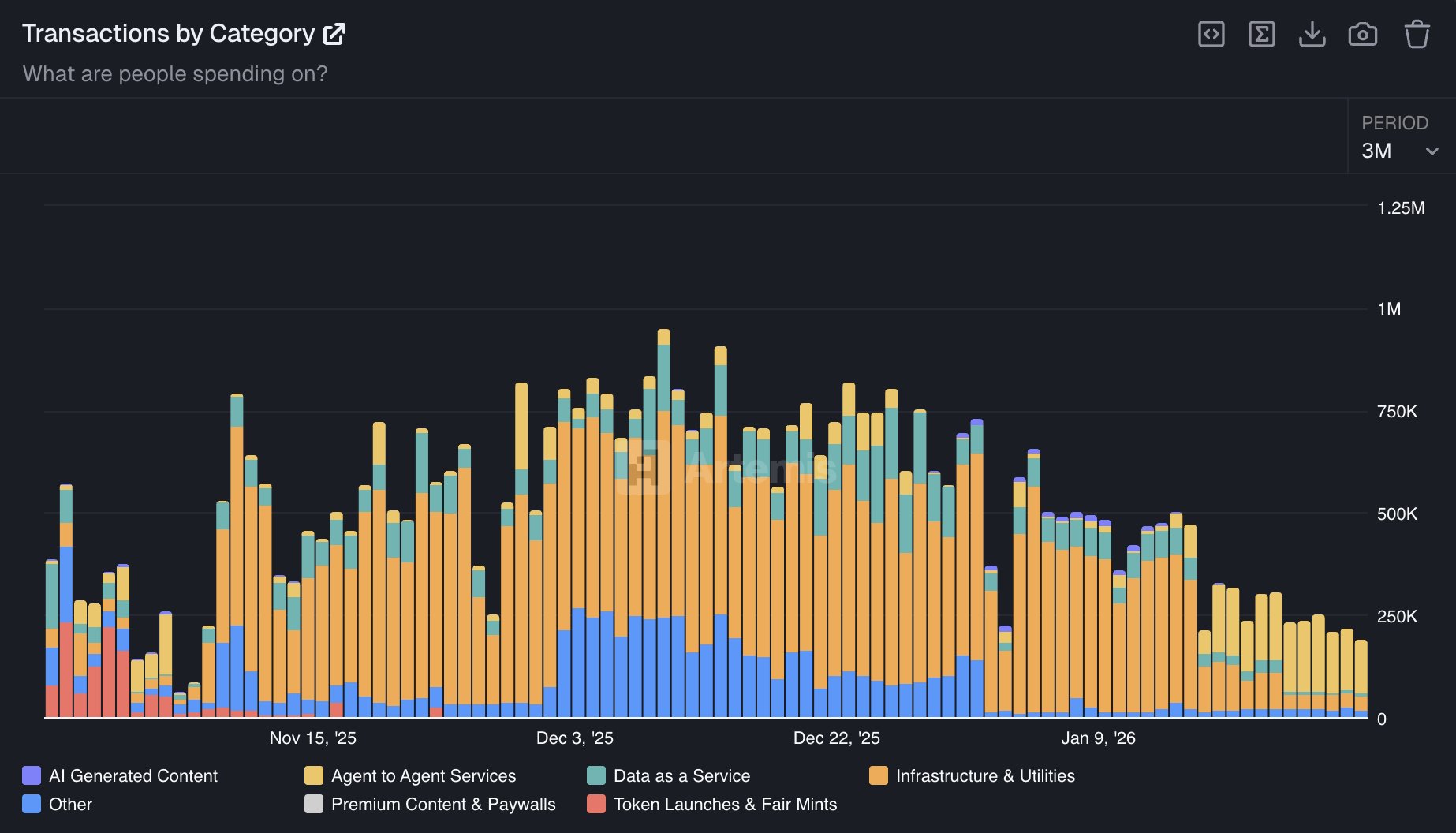
For traders monitoring market conditions, understanding the underlying asset volatility is crucial when estimating transaction costs. The following chart illustrates recent market movements that may impact the gas fees or settlement times associated with x402 payments.
Choosing facilitators and stablecoins
x402 Endpoints for AI Trading Signals works best as a sequence, not a scramble through settings. Do the minimum first: confirm compatibility, connect the core hardware, update only when needed, and test the result before adding optional features. That order keeps the task understandable and makes failures easier to isolate. After each step, pause long enough for the interface to finish syncing. Many setup problems are timing problems disguised as configuration problems. If the same step fails twice, record the exact error, restart the smallest affected piece, and retry before moving deeper.
The simplest way to use this section is to keep the setup small, verify each change, and record the stable configuration before adding optional accessories.
Implementation checklist for developers
Deploying an x402 endpoint requires strict adherence to the HTTP status code flow. Unlike traditional APIs, x402 relies on the 402 Payment Required status to gate access. Your implementation must handle this response correctly to allow AI agents to retry with payment credentials.
Configure your endpoint to return a 402 status when payment is missing or invalid. Include the required x-pay header in the response to guide the agent on how to proceed. This is the core mechanism of the protocol.
When the agent retries with the x-pay header, verify the transaction hash or payment proof. Ensure the payment matches the expected amount and currency for the requested trading signal. Reject invalid proofs immediately.
Upon successful validation, return the AI trading signal in the response body. Use standard JSON formatting. Ensure the data structure is consistent so agents can parse it automatically without manual intervention.
Implement robust error handling for network failures or invalid requests. Return clear error messages in the 402 response body to help agents debug payment issues. Avoid generic error codes that obscure the payment requirement.
A clean implementation ensures your endpoint is compatible with the growing ecosystem of x402-enabled agents. Test thoroughly with known agents like those from the ACP (Agent Communication Protocol) before going live.
No comments yet. Be the first to share your thoughts!