Why x402 fits trading bots
Traditional API billing was built for human users, not autonomous agents. It assumes a credit card on file, a login session, and a human ready to click "approve" when a limit is hit. High-frequency trading bots cannot pause their execution loop to authenticate with a 3D Secure payment gateway. They need to pay for data or compute instantly, programmatically, and without friction. This is where x402 changes the game.
x402 is an HTTP-native payment protocol that turns the standard HTTP 402 status code into a functional payment mechanism. Instead of routing payments through a third-party processor like Stripe, AI agents can make micro-transactions directly between client and server. This removes the account creation step entirely. A trading bot can query a signal endpoint, receive a 402 response with payment instructions, settle the transaction in crypto, and immediately receive the data payload. The entire interaction happens in milliseconds.
For financial agents, this autonomy is non-negotiable. x402-secure is specifically designed for transactions involving autonomous AI agents, integrating pre-payment risk checks to ensure the agent has the necessary funds before the request is fulfilled. This creates a closed-loop economy where bots can buy high-frequency signals, access premium market data, or rent compute power without human intervention.
This architectural shift allows trading bots to operate as independent economic actors. They can dynamically adjust their spending based on market volatility, paying more for real-time data during high-volatility periods and scaling back during quiet markets. The protocol’s simplicity—native to HTTP—means it integrates into existing API infrastructure with minimal overhead, making it the ideal billing layer for the next generation of financial AI.
Setting up the endpoint
Monetizing AI trading signals requires a payment layer that can handle machine-to-machine transactions without friction. You don't need a merchant account, a Stripe integration, or a database to start charging for API calls. The x402 protocol enables direct payments in stablecoins, primarily USDC, allowing your endpoint to verify payment before returning data.
The setup process relies on the Coinbase Developer Platform (CDP) and the broader Eco ecosystem. This infrastructure provides the necessary tools to generate payment requests and verify receipts directly within your code. By integrating these components, you turn a standard API endpoint into a self-sovereign revenue stream.
Begin by installing the official Coinbase CDP SDK in your project. This library handles the complex cryptography and protocol logic required to format x402 requests. It abstracts the low-level blockchain interactions, allowing you to focus on your trading logic rather than payment infrastructure.
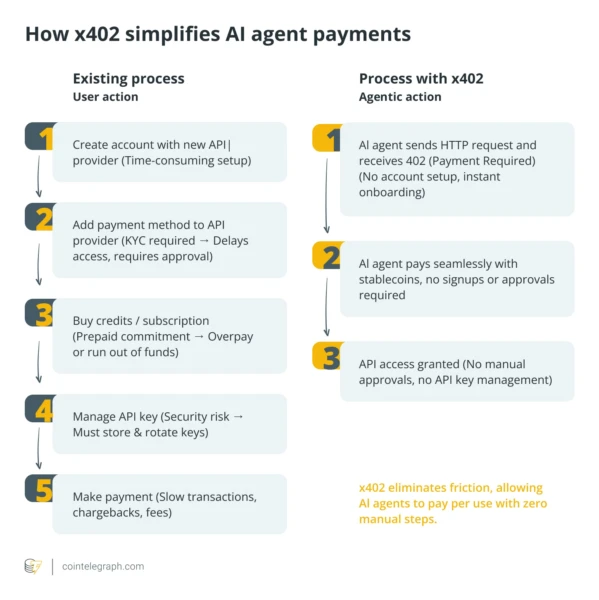
Update your trading signal endpoint to check for a valid X-Receipt header on incoming requests. If the header is missing, your endpoint should generate an x402 payment request and return it with a 402 Payment Required status code. This request includes the price, the asset (USDC), and the destination wallet address.
Once a buyer or AI agent sends the payment, they include the transaction receipt in the X-Receipt header of their next request. Your endpoint must verify this receipt against the blockchain to ensure the payment was confirmed. Only after successful verification should you return the requested trading signal data.

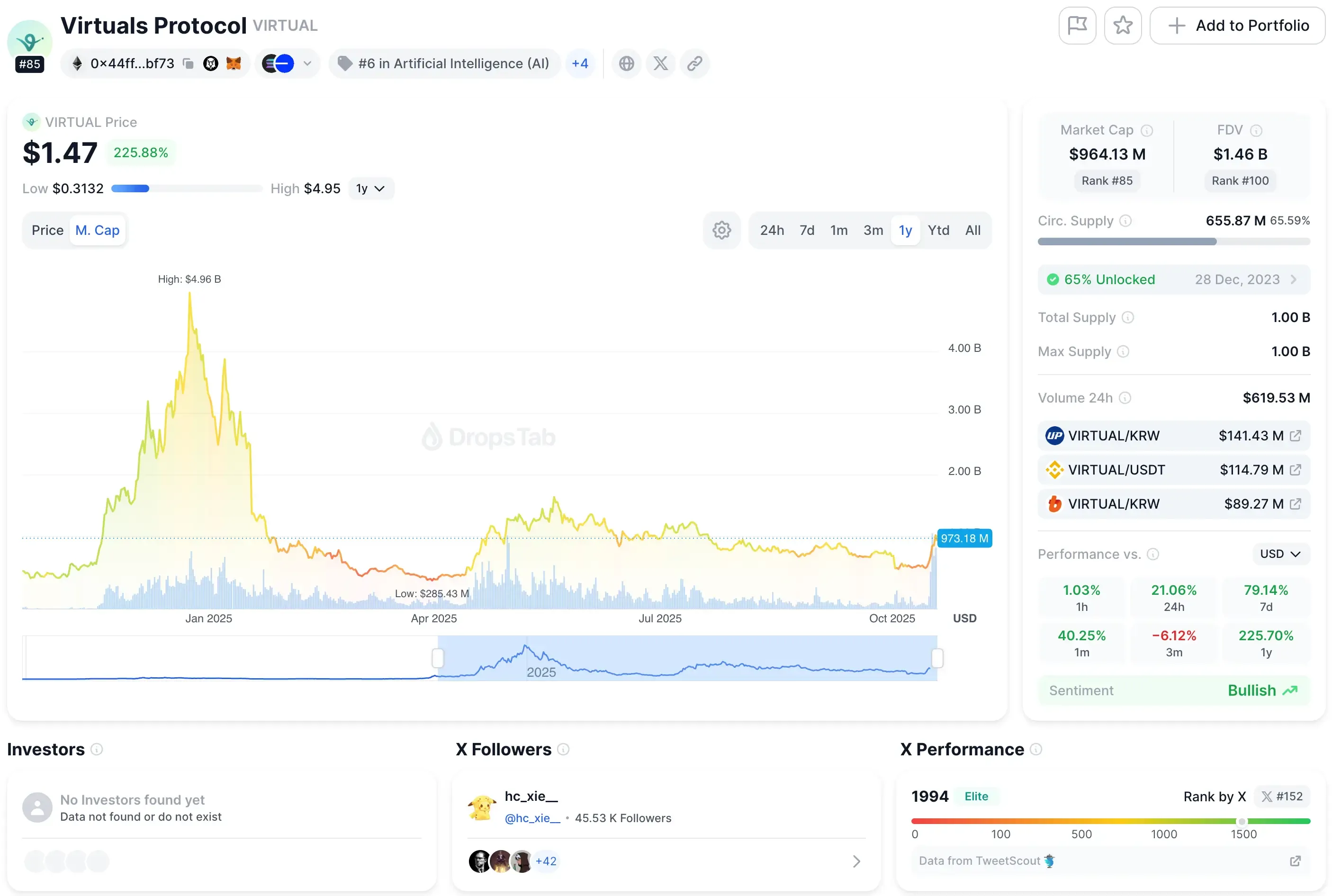
Use the Coinbase Developer Platform testnet or a small mainnet transaction on Base to validate your integration. The USDC chart below shows the stability of the asset you will be accepting, ensuring your revenue isn't exposed to the volatility typical of other cryptocurrencies.
This workflow ensures that every request for your AI trading signals is backed by a verified payment. It removes the risk of non-payment and automates the billing process, making it scalable for high-frequency data delivery.
Pricing signal data
Monetizing AI trading signals requires a payment infrastructure that matches the speed of the market. Traditional billing models rely on credit cards or fixed subscriptions, which create friction for high-frequency data access. x402 changes this by enabling autonomous, micro-transactional payments directly between AI agents and data providers. This shift allows you to price your signals with granular precision, moving away from rigid monthly fees toward flexible, usage-based models.
Pay-per-call vs. Subscription
The choice between pay-per-call and subscription models depends on how your clients consume data. Pay-per-call aligns costs with actual usage, ideal for algorithms that trigger only during volatile market conditions. Subscriptions offer predictable revenue but may discourage light users. x402 supports both by allowing agents to pay per request or maintain a funded wallet for continuous access.
How x402 Handles Microtransactions
x402 is designed for internet-native payments, meaning it can process tiny payments in stablecoins like USDC without the high fees of traditional banking rails. An AI agent calling your market data API can pay a fraction of a cent per request and immediately retrieve liquidity data. This autonomy removes the need for human intervention or complex invoice processing, making it viable to monetize even the smallest data points.
Comparison: Traditional Billing vs. x402
The following table contrasts the operational realities of legacy billing with the x402 standard for trading signal distribution.
| Feature | Traditional API Billing | x402 Autonomous Payments |
|---|---|---|
| Payment Method | Credit Card / Invoice | On-chain Stablecoin (e.g., USDC) |
| Transaction Size | High minimums ($10+) | Microtransactions (fractions of a cent) |
| Automation | Manual setup, recurring billing | Fully autonomous agent-to-agent |
| Settlement Time | 1-3 business days | Near-instant (blockchain confirmations) |
| Cross-Chain Support | Limited (fiat gateways) | Multi-chain by default (Base, Solana, etc.) |
By adopting x402, you reduce the overhead of collections and open your data to a new class of automated buyers. Your clients’ AI agents can now treat your signal endpoint like any other data source, paying only when the information adds value to their strategy.
Integrating with trading bots
Trading bots don’t trade on gut feeling; they trade on data. To monetize AI signals, you need a way for those bots to fetch real-time analysis and pay for it without human intervention. x402 endpoints provide that bridge. Your bot sends a request, the endpoint returns the signal, and the payment happens automatically in the background.
This works by treating the AI signal provider like any other API. The bot initiates a call to the x402 endpoint. The endpoint checks for payment capability—usually a signed transaction or a pre-funded wallet balance—and then returns the JSON data containing the trade recommendation. If the payment fails or is missing, the endpoint returns an HTTP error instead of the data.
The beauty of this setup is that it removes the friction of subscriptions. Your bot doesn’t need to manage a monthly invoice. It pays per request or per token, exactly when it uses the data. This aligns costs directly with usage. If the bot isn’t trading, it isn’t paying. This pay-per-use model is ideal for high-frequency strategies where signal quality fluctuates.
For this to work, your trading bot needs to handle the x402 protocol headers. Most modern Python or TypeScript trading frameworks can be adapted to include these headers in their HTTP clients. The endpoint will then validate the payment and serve the signal. This creates a closed loop: data in, payment out, trade execution follows.
Common integration pitfalls
When monetizing AI trading signals, the technical gap between a prototype and a production endpoint often determines whether you succeed or fail. The x402 standard simplifies the payment rail, but it does not remove the responsibility of building resilient infrastructure. High-frequency trading environments demand sub-second reliability, and any latency in payment verification can result in missed market opportunities or broken agent workflows.
The most frequent failure point is improper handling of payment retries. Trading agents may retry requests aggressively if they do not receive an immediate response, leading to duplicate charges or rate-limit bans. You must implement idempotency keys on every x402 request. This ensures that if a network hiccup occurs between the buyer and your server, the same payment is not processed twice. Without this safeguard, your revenue model becomes fragile and prone to disputes.
Another critical risk is the assumption that the x402 protocol handles all error states gracefully. If your endpoint returns a non-200 status code due to a temporary database lock or a memory spike, the x402 client may interpret this as a failed payment rather than a temporary service error. You should separate payment validation logic from signal computation. Use a lightweight gateway to verify the x402 payment token first, then queue the heavy computation. This separation ensures that your trading engine remains available even if the payment layer experiences brief congestion.
Next steps for developers
Start by reviewing the official quickstart guide to understand the core integration flow. The documentation outlines how to configure your API to accept x402 headers, ensuring your trading signals are monetized correctly from the first request.
Install the required SDKs and configure your development environment to support the x402 protocol. This foundational step ensures your codebase can handle the new payment standards.
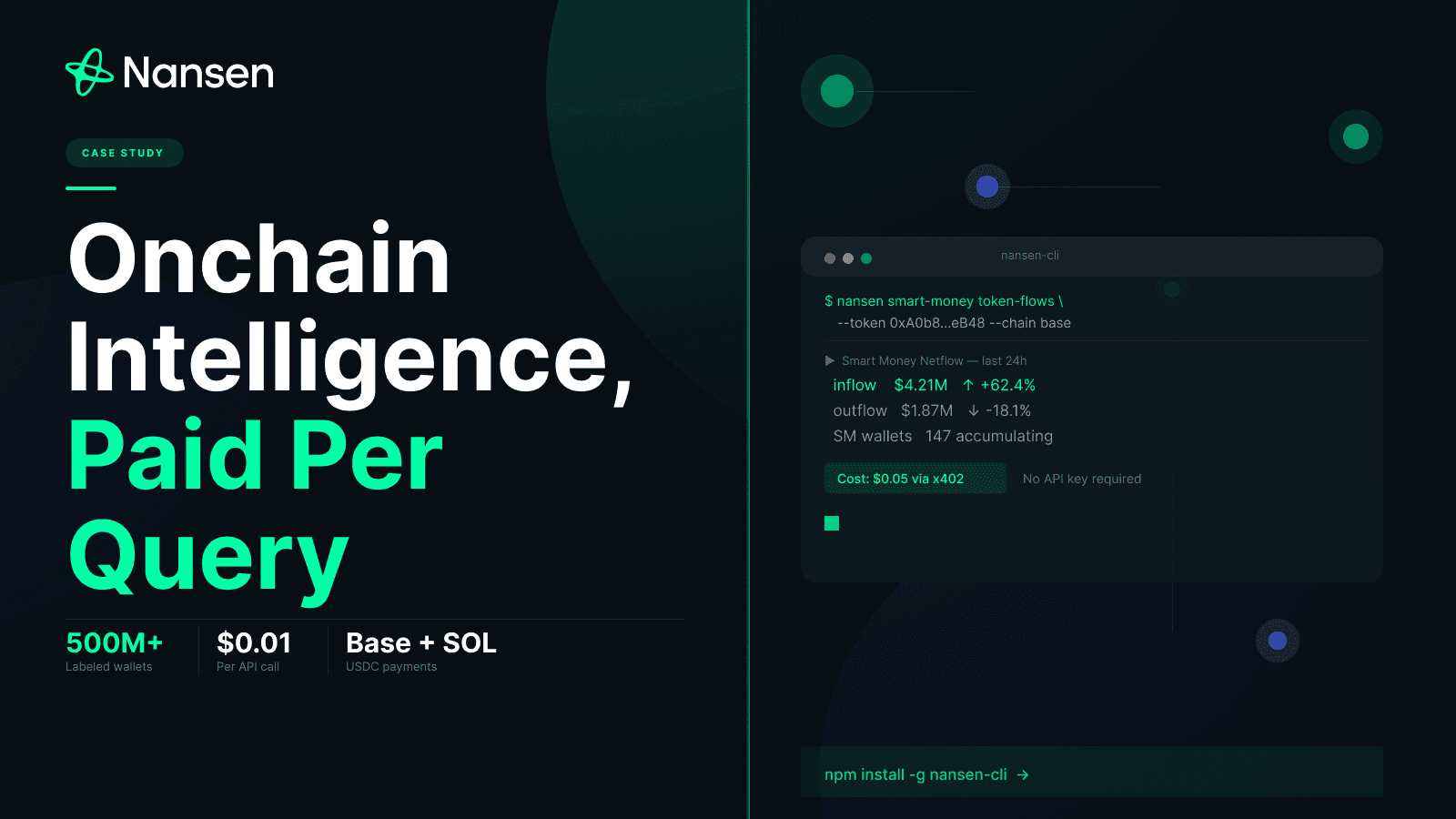
Modify your API endpoints to recognize and process x402 payment headers. This allows AI agents to automatically pay for data access without manual intervention.

Use sandbox environments to simulate agent transactions. Verify that payments are processed correctly before deploying to your live trading infrastructure.
Once integrated, monitor your transaction logs to ensure smooth operation. This checklist helps you move from concept to a revenue-generating service efficiently.
No comments yet. Be the first to share your thoughts!