Set up the x402 payment layer
To let AI agents discover and pay for your trading signals automatically, you need to implement the x402 protocol on your API infrastructure. This protocol allows servers to return a 402 Payment Required status code with payment instructions, enabling agents to pay in stablecoins like USDC and retry the request with a valid payment receipt.
Follow these steps to integrate the payment layer into your endpoint.
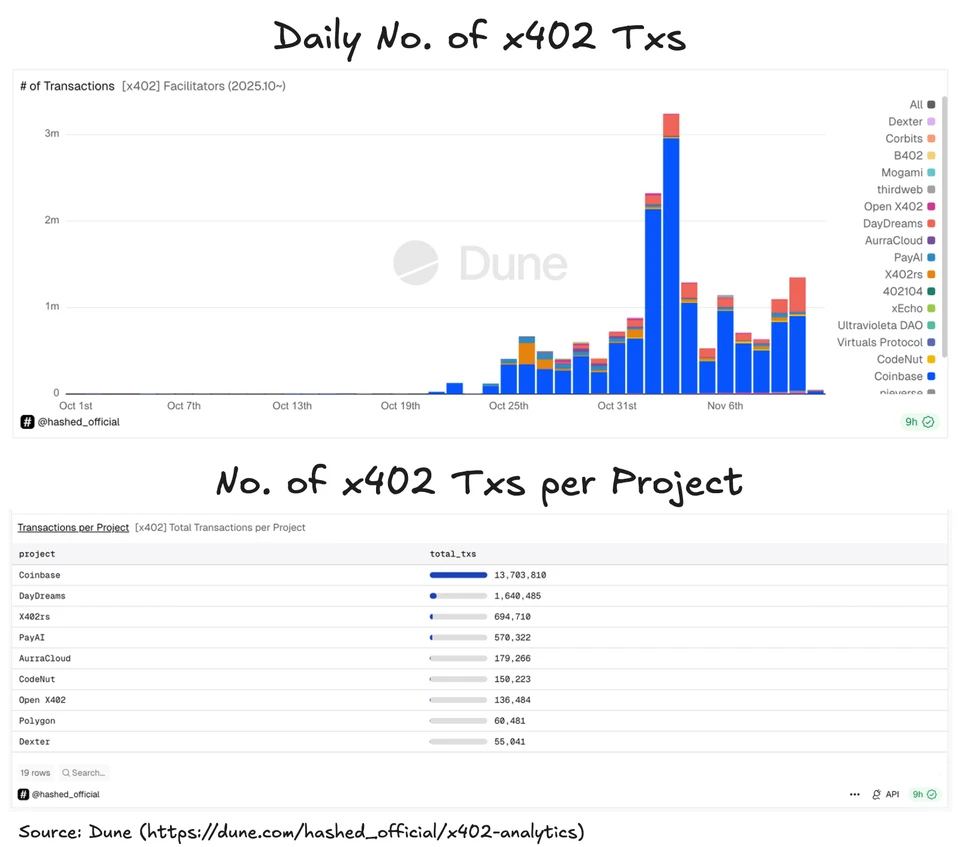
Before agents can find your signal, you must register your endpoint on the x402 Bazaar. This discovery layer, facilitated by the Coinbase Developer Platform (CDP), catalogs x402-enabled services so agents can browse and search for them. Use the CDP Facilitator to submit your endpoint details, ensuring your metadata clearly describes the signal type and price.
Update your API logic to intercept requests from unknown or unpaid agents. When a request arrives, check for a valid payment receipt. If none is present, return a 402 Payment Required response. This response must include the payment details, such as the chain, token address, and amount, allowing the agent to initiate a payment transaction.
Once the agent pays, it will retry the request with a payment receipt attached to the header. Your server must verify this receipt against the blockchain to confirm the transaction was successful. If the payment is valid, process the request and return the trading signal data. If invalid, reject the request with another 402 response.
Use a test agent or the x402 SDK to simulate the full payment flow. Verify that the agent can discover your endpoint on the Bazaar, pay the required amount, and successfully receive the signal data. This ensures your integration handles the protocol mechanics correctly before going live.
By following these steps, you create a seamless payment infrastructure that allows AI agents to automatically access your trading signals without manual intervention.
Structure signal data for agent consumption
Your API response is the only thing the AI agent sees after it pays. If the JSON is messy, the agent fails. For trading signals, you need a structure that is rigid enough to parse instantly but flexible enough to handle different market conditions. The goal is low-latency consumption: the agent should extract the signal, price, and action without guessing.
Start with a flat, predictable schema. Avoid nested objects where a simple key-value pair works. Agents parse linear data faster. Use ISO 8601 timestamps for all time-based fields to avoid timezone confusion. Include a signal_id for tracking and deduplication, which is critical when agents retry requests after network hiccups.
Here is a minimal, effective structure for a trading signal:
{
  "signal_id": "sig_9821",
  "asset": "BTC-USD",
  "direction": "long",
  "entry_price": 64200.50,
  "confidence": 0.85,
  "timestamp": "2024-05-20T14:30:00Z",
  "metadata": {
    "source": "on-chain_volume",
    "risk_level": "medium"
  }
}
Keep the metadata object small. Agents have limited context windows. Only include fields that directly influence the trading decision. If you need to send complex charts or historical data, provide a URL to a lightweight JSON endpoint instead of embedding the data directly. This keeps the initial payment response fast and the agent's memory clean.
Handle agent payment and receipt validation
When an AI agent requests a paid endpoint, the server doesn't serve data immediately. Instead, it returns an HTTP 402 status code. This response includes payment instructions, such as the required stablecoin amount and the destination wallet address. The agent then processes the payment on-chain and retries the request with a payment receipt. Your endpoint must validate this receipt before delivering the trading signal.
This flow ensures that payment happens before data access. It prevents unauthorized use of your AI models and guarantees compensation for the compute resources used.
Configure your endpoint to return a 402 status code when an unauthenticated or unpaid request arrives. The response body should contain the payment details, including the amount, currency (usually USDC), and the recipient address. This tells the agent exactly what to pay and where to send the funds. The agent will then initiate the transaction on the specified blockchain.
When the agent retries the request, it includes a payment receipt in the headers or body. This receipt contains proof of the on-chain transaction, such as the transaction hash and the block number. Extract these details from the incoming request. The receipt is the agent's way of proving that the payment was successfully broadcast to the blockchain.
Use a blockchain explorer or a dedicated verification library to check the transaction hash provided in the receipt. Confirm that the transaction exists, is confirmed, and that the amount sent matches the required payment. Ensure the transaction was sent to the correct wallet address specified in your 402 response. This step is critical to prevent fraud or double-spending attempts.
Once the payment is verified, process the request and return the AI trading signal. Include the data in the response body with a standard 200 status code. If verification fails, return a 402 or 403 error to indicate that the payment was invalid or insufficient. Always log the transaction hash for auditing purposes.
This process creates a secure, automated payment loop. By validating receipts on-chain, you ensure that only paying agents receive your valuable AI insights. This approach aligns with the x402 protocol's goal of enabling seamless machine-to-machine commerce.
List signals on the x402 Bazaar
Once your endpoint is live, it remains invisible to AI agents until you register it with the CDP Facilitator. The Facilitator acts as the indexing layer for the x402 Bazaar, a discovery network where autonomous agents browse and search for x402-enabled services. Without this registration step, your trading signals will not appear in agent search results, regardless of how robust your API is.
Registering your endpoint involves submitting specific metadata that helps agents verify your service’s reliability and cost structure. You will need to provide your endpoint URL, the specific signal types you offer (e.g., "BTC/USD momentum"), and the payment parameters defined in your x402 headers. This metadata is cached by the Bazaar, so agents can quickly assess whether your data fits their trading models before initiating a request.
The registration process is handled through the CDP Facilitator interface. After submitting your details, your endpoint enters a verification queue. Agents rely on this verified status to ensure they are paying for legitimate, functional services. Once approved, your signal becomes part of the global x402 ecosystem, accessible to any agent configured to consume market data via HTTP-based payments.
Common integration mistakes to avoid
Even with a clear roadmap, building x402 endpoints for AI trading signals can trip up developers who treat the protocol like a standard REST API. The friction usually comes from misunderstanding how the payment handshake works or ignoring the multi-chain realities of the V2 specification. Below are the most frequent pitfalls and how to sidestep them.
Ignoring the 402 status code logic
The core of x402 is the HTTP 402 status code, but many developers return it incorrectly or fail to handle the Payment-Token header properly. If your endpoint returns a 402, it must include the Payment-Token header with a signed payment request. The client (your AI agent) then signs this request and sends it back in the Authorization header. If you skip the signature verification or mishandle the token structure, the agent will fail to pay, and your signal delivery will stall.
Failing to support V2 multi-chain features
The x402 V2 standard was designed to work across multiple chains, including Base, Solana, and other L2s, without requiring custom logic for each. A common mistake is hardcoding support for only one network or asset. If your trading signal endpoint only accepts USDC on Ethereum mainnet, you are limiting your potential audience and breaking the V2 promise of interoperability. Ensure your implementation can parse and validate payment tokens from various chains as defined in the x402 V2 specification.
Overlooking idempotency
AI agents may retry requests due to network latency or timeout errors. If your endpoint processes payments every time it receives a valid token, you risk double-charging the user. Implement idempotency keys or track transaction hashes to ensure that each payment is only processed once. This is critical for financial applications where trust and accuracy are paramount.
Not validating the agent's identity
While x402 handles the payment, it doesn't automatically verify the identity of the AI agent. For trading signals, you might want to ensure the request comes from a trusted source. Consider integrating additional authentication layers or rate limiting based on the agent's wallet address to prevent abuse.
No comments yet. Be the first to share your thoughts!