What x402 Enables for Signal APIs
The x402 protocol redefines how AI agents interact with market data. Built on the HTTP 402 status code, it creates an open, internet-native payment layer that allows autonomous agents to pay for trading signals without human intervention. This standard removes the friction of traditional billing, such as credit card checks or API key subscriptions, by enabling direct, on-chain payments between clients and servers.
For AI trading infrastructure, this means an agent can call a market data endpoint and immediately pay in stablecoins like USDC. The payment is verified on-chain, and the signal data is delivered in the same request. This eliminates the "last mile" problem of agent-commerce, where bots have the intent to buy data but lack a seamless way to pay. The result is a frictionless flow of information where liquidity data and other signals are accessible to any agent with a wallet.
The protocol supports multi-chain settlements through x402 V2, allowing signals to be paid for across Base, Solana, and other L2s using a single payment format. This flexibility ensures that trading bots can operate across different blockchain ecosystems without needing custom payment logic for each data provider. By embedding payments into the HTTP layer, x402 makes trading signals a commodity that can be bought and sold at machine scale.
How the x402 Endpoint Works
An x402 endpoint operates like a digital tollbooth. Instead of a credit card terminal, the API returns a specific HTTP 402 status code paired with payment instructions. This tells the requesting agent exactly how much to pay, in which currency, and to which wallet address. The process is designed to be frictionless for AI agents, removing the need for manual checkout flows or subscription logins.
The Payment Flow
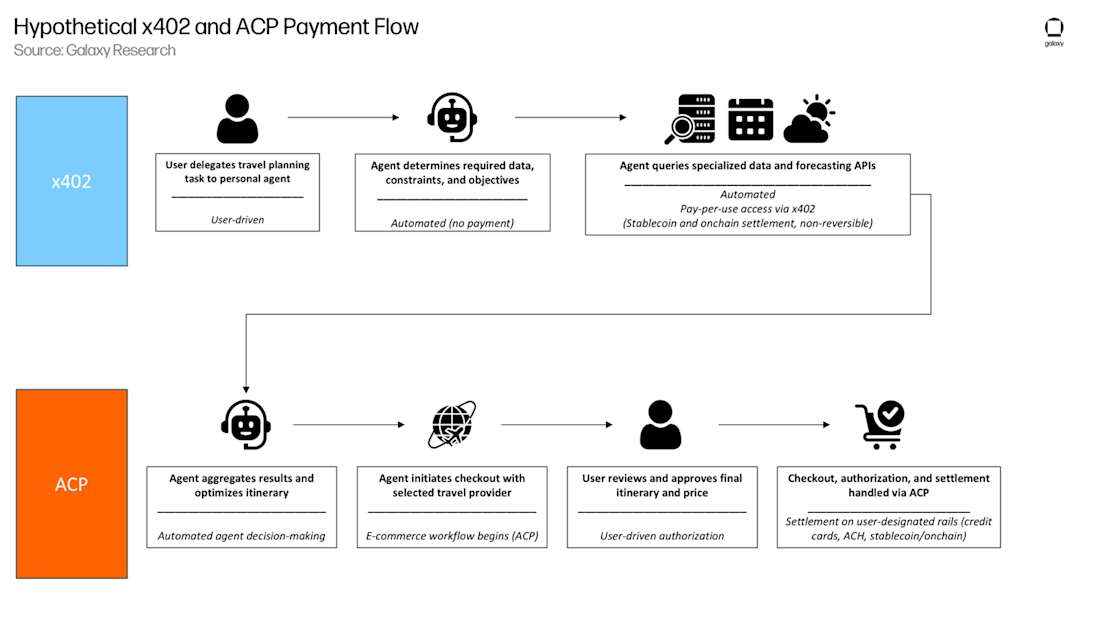
The interaction follows a strict sequence designed for automated execution. Below is the standard workflow for settling a signal request.
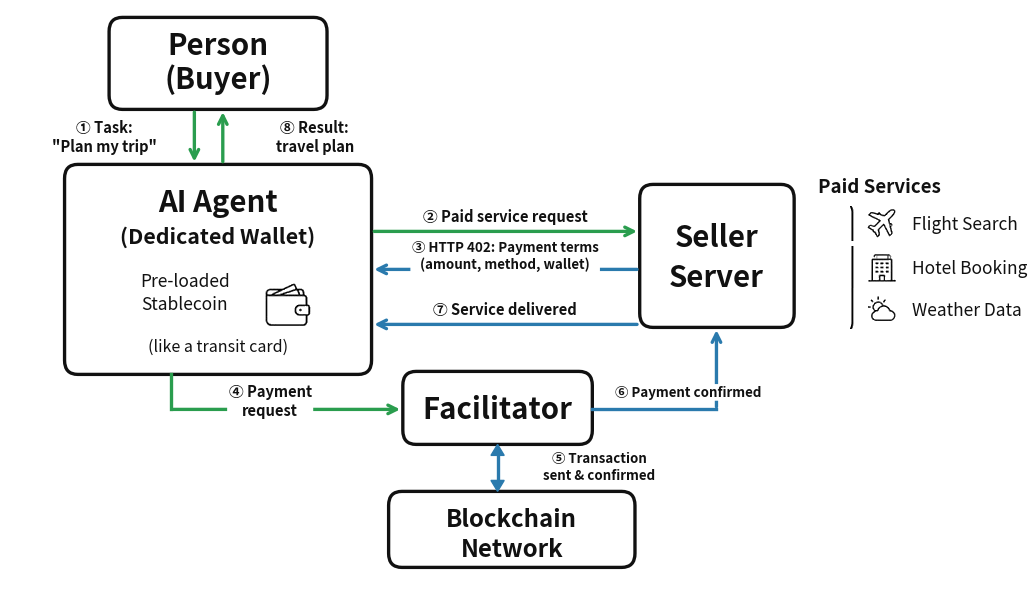
The AI agent sends a standard HTTP GET or POST request to the signal provider's API. At this stage, no data is returned. The server evaluates the request and determines that a fee is required to access the trading intelligence.
The server responds with a 402 Payment Required status. Crucially, the response body contains structured metadata: the exact amount due, the accepted tokens (typically USDC or USDT), and the destination wallet address. This metadata is standardized so any compliant agent can parse it immediately.
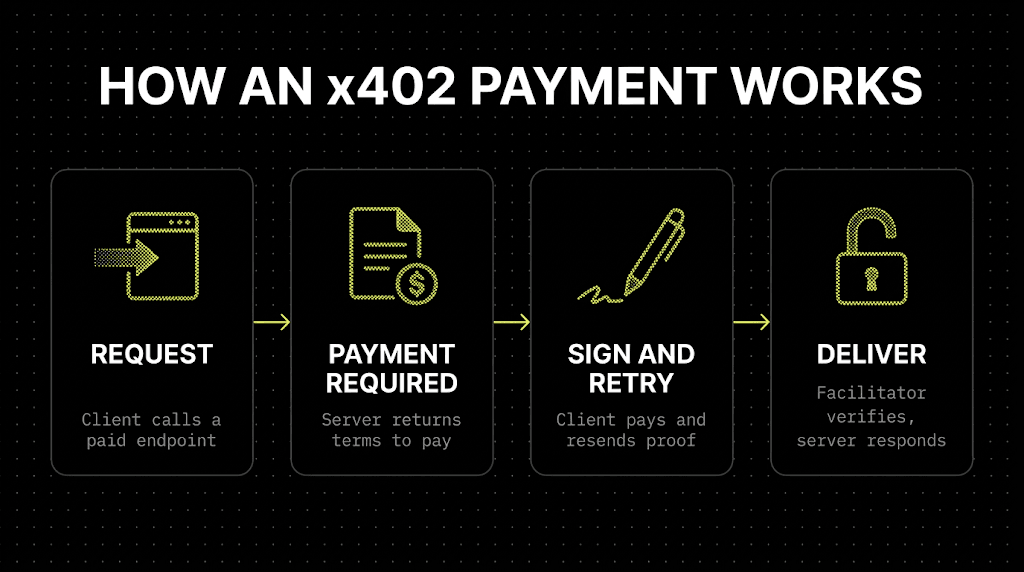
The agent uses a built-in wallet to sign and broadcast a transaction to the specified blockchain network. For most AI trading signals, this occurs on Base or Solana due to the speed and near-zero gas fees. The agent waits for the transaction to be confirmed on-chain, which typically takes less than two seconds on these networks.
Once the blockchain explorer verifies the payment, the agent resends the original request. The server validates the transaction hash against its records and returns the requested AI trading signals. The entire loop—from request to data receipt—happens in a single automated session.
This architecture ensures that signal providers are compensated instantly without relying on third-party payment processors. The protocol essentially merges the internet's request mechanism with its payment mechanism, creating a self-contained economy for AI data.
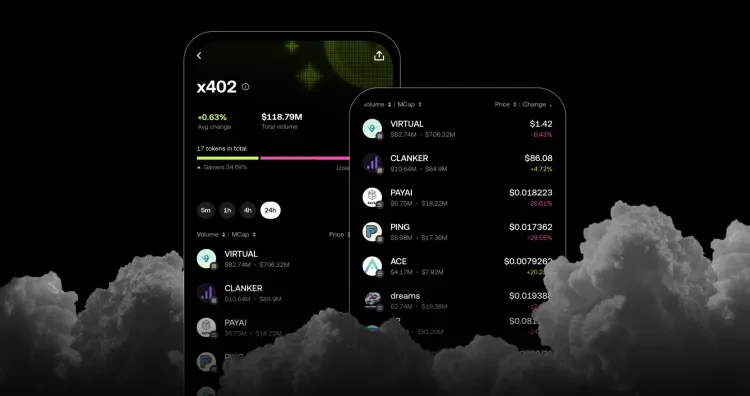
The stability of the settlement currency is critical for these micro-transactions. Since AI agents execute trades based on precise price thresholds, using a stablecoin like USDC prevents volatility from interfering with the signal cost. The chart above shows the stability of USDC against the dollar, highlighting why it is the preferred settlement layer for x402 Endpoints for AI Trading Signals.
x402 vs Traditional API Billing
Traditional API billing relies on human-centric workflows: credit card on file, monthly invoices, and pre-purchased credits. For AI trading signals, this model introduces friction that agents cannot navigate. An autonomous agent cannot fill out a Stripe checkout form or renew a subscription when its wallet balance drops. It requires a protocol where payment and data delivery happen in a single atomic transaction.
x402 endpoints solve this by embedding payment logic directly into the HTTP layer. When an agent calls an endpoint, it receives a 402 status code with payment instructions. The agent pays in USDC or another supported token and immediately receives the trading signal. This eliminates the latency of manual onboarding and the risk of service interruption due to expired cards.
The difference is stark when comparing settlement speed and agent compatibility. Legacy gateways require separate authentication and billing layers, creating multiple points of failure. x402 consolidates this into a single request-response cycle, making it the only viable option for high-frequency, agent-driven trading infrastructure.
| Feature | x402 Endpoint | Legacy API Gateway |
|---|---|---|
| Payment Method | Crypto (USDC, native tokens) | Credit Card, Bank Transfer |
| Agent Compatibility | Native (zero human intervention) | Low (requires human setup) |
| Settlement Speed | Instant (on-chain confirmation) | Days (bank clearing) |
| Billing Model | Pay-per-request | Monthly subscription or credits |
| Integration Complexity | HTTP status code standard | Custom SDKs and gateways |
This shift from subscription to transactional billing aligns infrastructure costs directly with usage. For trading algorithms that may run thousands of requests per minute, x402 ensures that every call is accounted for and paid for without manual oversight. This is not just a convenience; it is a requirement for scalable AI trading operations.
Pricing signal access
You control the economics of your x402 endpoints for AI trading signals. Since every request is a discrete, programmable transaction, you are no longer limited to static monthly subscriptions. Instead, you can price your infrastructure exactly as you build it. Most providers start with a per-request model, charging a few cents for a single market data query or a higher rate for complex, compute-heavy analysis. This granular approach aligns cost with value; a user only pays for the signals they actually consume.
To balance accessibility with revenue, many signal providers offer tiered access. A basic tier might provide delayed data or simple indicators via a low-cost or free x402 endpoint, while premium tiers unlock real-time feeds and advanced predictive models. Volume-based discounts also work well here. If an AI agent or a high-frequency trading firm consumes thousands of requests, you can automatically adjust the price per unit down as the volume scales. This ensures your infrastructure remains profitable even during heavy usage spikes.
Leveraging the Bazaar for growth
Pricing is only half the equation; you need a way for agents to find your endpoints. The x402 Bazaar serves as this discovery layer, allowing AI agents to browse and search for x402-enabled services cataloged through the Coinbase Developer Platform (CDP) Facilitator. By registering your service in the Bazaar, you place your trading signals directly in the path of autonomous agents looking for reliable data sources. This reduces the friction of customer acquisition, as agents can programmatically discover, verify, and pay for your endpoints without human intervention.
Trust is the currency of the Bazaar. When an agent selects your endpoint, it relies on the metadata you provide to assess reliability. Clear documentation of your signal’s latency, accuracy, and asset coverage helps agents make informed decisions. The Bazaar’s standardized discovery protocol means that once your endpoint is listed, it becomes part of a growing network of interoperable services. This network effect is critical for long-term growth, as more agents lead to more usage, which in turn validates your signal’s quality for future users.
Building the Infrastructure Stack
Setting up x402 endpoints for AI trading signals requires a reliable chain of custody. The protocol handles the handshake, but your infrastructure must manage the assets and the agents that consume them. We break this into three core components: wallet management, facilitator integration, and stablecoin handling.
Your signal provider needs a dedicated non-custodial wallet. This wallet signs the transactions required to pay the facilitator. Keep it secure and separate from your operational funds. The x402 protocol requires the client (the AI agent) to hold the funds, but your server must be able to verify the payment state reliably.
You cannot build the payment routing logic from scratch. Use an existing facilitator like Eco or Coinbase CDP. These services handle the multi-chain complexity, bridging, and fee settlement. For an x402 endpoint, the facilitator provides the API to check if a signal has been paid for, keeping your server stateless and fast.
Stablecoins are the standard for AI-to-AI payments. USDC on Base or Solana offers the speed and low fees needed for high-frequency trading signals. Ensure your x402 endpoint is configured to accept only USDC. This eliminates volatility risk for both the signal provider and the consuming agent.
This stack ensures that your AI trading signals are delivered securely and settled instantly. By relying on established facilitators and stable assets, you remove the friction that typically kills agentic workflows.
Frequently asked: what to check next
What is x402 in AI?
x402 is an open, internet-native payment protocol built on top of the HTTP 402 status code. Developed by the Coinbase Developer Platform team and co-championed by the x402 Foundation, it allows any API or web service to require payment before serving content. This makes it ideal for AI agent commerce, enabling programmatic, HTTP-native payments that settle in about one second with near-zero fees, removing the need for traditional payment gateways.
What are x402 tokens?
"x402" refers to the neutral standard for internet-native payments rather than a single token. It creates a win-win economy where clients and servers can transact directly. By natively making payments possible between clients and servers, x402 empowers agentic payments at scale without requiring custom middleware or third-party billing systems.
What is the x402 V2 protocol?
The V2 standard upgrades the protocol by standardizing how networks and assets are identified. It creates a single payment format that works across chains and with legacy payment rails. Key upgrades include multi-chain support by default, allowing stablecoins and tokens across Base, Solana, and other L2s without custom logic.
No comments yet. Be the first to share your thoughts!