Get x402 endpoints ai trading right
Before you connect your trading signals to an x402 endpoint, you must align your infrastructure with the protocol’s payment requirements. The x402 standard, released by Coinbase in May 2025, requires servers to return an HTTP 402 status code with specific payment instructions. This means your API must be designed to accept on-chain payments before delivering data. If your endpoint only supports traditional API keys or credit card billing, it will not work with autonomous AI agents.
The x402 V2 protocol standardizes how networks and assets are identified, allowing a single payment format to work across multiple chains. You need to decide which stablecoin and blockchain combination fits your trading strategy. Most integrations use USDC on Base for its low fees and speed, but V2 also supports Solana and other L2s. Ensure your backend can parse these multi-chain payment proofs without custom logic for each asset.
Your trading signals must also pass pre-payment risk checks if you are using the x402-secure ecosystem. This step verifies that the AI agent requesting your data is legitimate and has sufficient funds. Without this verification, your endpoint could be flooded with unpaid requests or malicious bots. Configure your server to handle these checks transparently, ensuring that only verified agents receive your high-value trading data.
-
Verify server returns HTTP 402 with payment requirements
-
Configure USDC on Base or supported V2 chain
-
Integrate pre-payment risk checks for AI agents
Build your x402 endpoint for automated API monetization
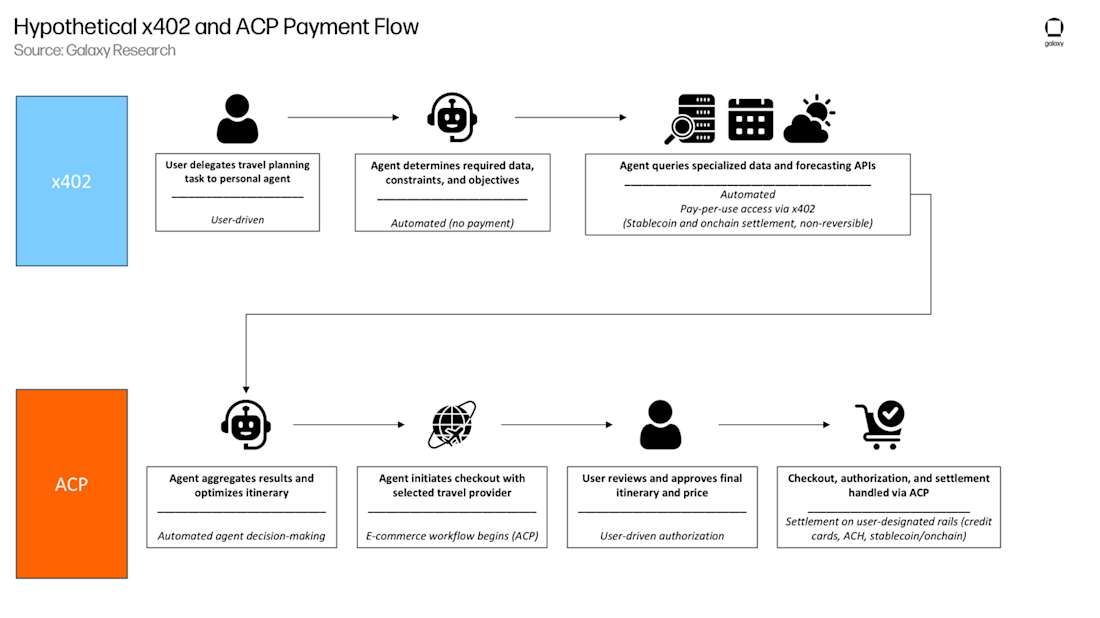
Integrating x402 endpoints allows AI trading signal providers to monetize API access directly from autonomous agents. Instead of relying on legacy credit card gateways, your server accepts on-chain payments, typically USDC on Base, and releases data only after verification. This guide walks through the technical steps to implement this flow.
Your server must intercept API requests and check for payment status. If the request lacks valid payment, return an HTTP 402 Payment Required response. Include a Payment-Required header in the response body that specifies the exact payment conditions: the destination address, the required amount, and the supported token (e.g., USDC). This header acts as the invoice for the AI agent or client.
AI agents read the Payment-Required header to understand what they need to pay. Specify the chain (e.g., Base), the token contract, and the price per request or subscription. For trading signals, you might charge per API call or use a time-based subscription model. Ensure the header format matches the x402 specification so agents can parse it automatically without custom logic.
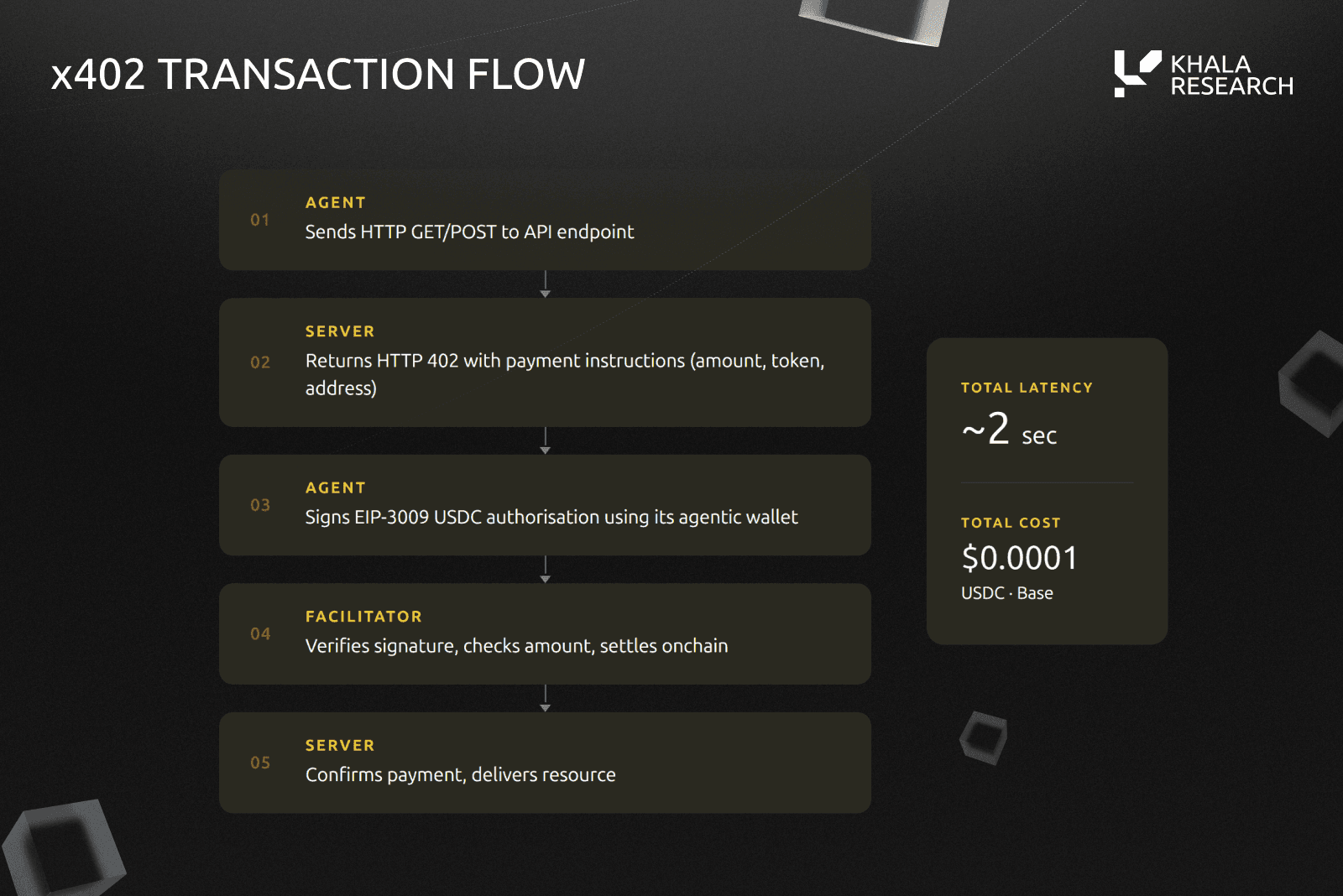
Once an agent pays, you need to verify the transaction. Use a facilitator or a direct on-chain listener to confirm the payment reached your wallet. For high-frequency trading signals, consider using a facilitator service that handles verification and settlement, reducing the latency between payment and data access. Verify the transaction hash against the chain to prevent double-spending or replay attacks.
After verification, update your server state to grant the client access to the API endpoint. Return HTTP 200 OK with the requested trading signal data. Implement a token or session mechanism to manage access duration, especially for subscription-based models. Ensure your API handles rate limiting and quota management based on the payment tier to prevent abuse.
Before going live, test your endpoint using a simple script that mimics an AI agent. Send a request, capture the HTTP 402 response, construct the payment, send the transaction, and verify the server unlocks the data. This ensures your Payment-Required header is parseable and your verification logic works correctly. Check edge cases like failed transactions or expired payments.
Common Integration Mistakes
Even with the x402 protocol standardizing onchain payments, integrating AI trading signals into API monetization workflows often fails due to implementation oversights. The following errors are the most frequent causes of broken agent payments and lost revenue.
Ignoring HTTP 402 Response Codes
The x402 protocol relies on the server returning a specific HTTP 402 Payment Required status code to signal that a payment is necessary. A common mistake is configuring the API to return a generic 403 Forbidden or 500 Internal Server Error when payment is missing. AI agents and x402-compatible clients specifically look for the 402 header to trigger their payment logic. If the server does not return this exact code, the agent cannot initiate the payment flow, and the request fails without a clear path to resolution.
Mismatched Stablecoin Networks
x402 V2 supports multi-chain payments, but clients and servers must agree on the specific network and asset. A frequent error occurs when a server expects payment in USDC on Base, but the client attempts to pay in USDC on Ethereum Mainnet or Solana. While x402 V2 simplifies cross-chain identification, the facilitator still requires the payment to land on the correct chain specified in the payment requirements. Always verify that the client’s wallet is funded on the exact chain the server expects before processing the signal.
Failing to Validate Onchain Settlement
Returning a successful API response before confirming onchain settlement is a critical security flaw. Some developers mistakenly treat the client’s payment transaction hash as proof of completion. However, transactions can fail, be reverted, or experience delays. The server must wait for the facilitator to verify the transaction on the blockchain and confirm it is final. Only after this verification should the server deliver the trading signal. Premature delivery exposes the API to free-riding, where agents consume data without the payment ever settling.
Overlooking Agent Identity and Rate Limits
x402 enables autonomous agents to pay for access, but it does not automatically handle rate limiting or identity verification. If you do not implement checks to prevent a single agent from exhausting your API quota, you risk being drained by a single misconfigured client. Integrate a lightweight identity layer that tracks payment history per agent address. This ensures that high-volume traders are monitored for unusual activity while allowing smaller agents to transact smoothly without friction.
X402 endpoints for ai trading signals: what to check next
Before committing to an x402 infrastructure for your trading signals, it helps to understand the mechanics of the protocol and its current capabilities. These answers address the most common technical and operational questions from developers and traders.
No comments yet. Be the first to share your thoughts!