Why x402 fits agent trading
Autonomous AI agents operate differently from human traders. They don't have credit cards, they don't use Stripe, and they certainly don't want to navigate CAPTCHAs or fill out forms every time they need fresh market data. Traditional API keys offer security, but they lack the atomic payment logic required for high-frequency, machine-to-machine commerce. When an AI agent needs real-time trading signals, it needs to pay and receive data in a single, automated step.
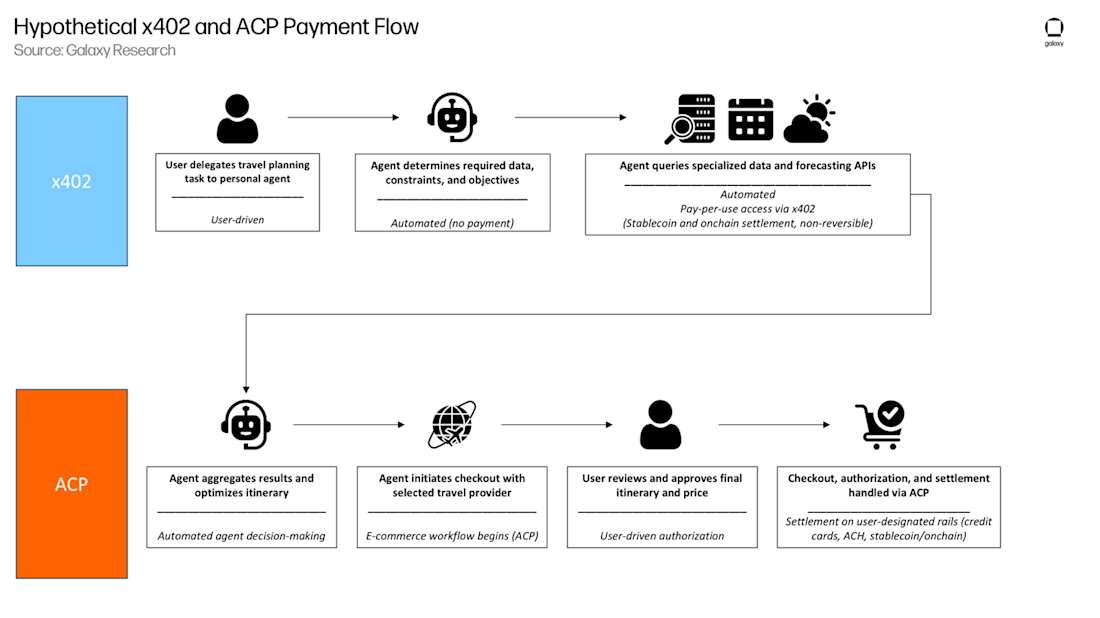
This is where the x402 protocol changes the infrastructure. Unlike legacy systems that require pre-funded wallets or complex OAuth flows, x402 is an open HTTP 402 payment standard. As described on x402.org, it allows servers to return a 402 Payment Required status with specific payment instructions. The AI agent’s client library then handles the transaction—typically paying in USDC on Base—and retries the request with the payment proof attached. This creates a seamless loop where payment and data retrieval happen atomically.
For trading signals, this distinction is critical. High-frequency agents execute thousands of requests per minute. If each request requires a pre-authenticated session or a separate funding step, latency increases and operational complexity explodes. x402 endpoints allow agents to "pay as they go" with minimal friction. The server validates the on-chain proof, and the data is delivered instantly. This model supports the scale and speed that AI trading systems demand, turning API access into a liquid, programmable asset.
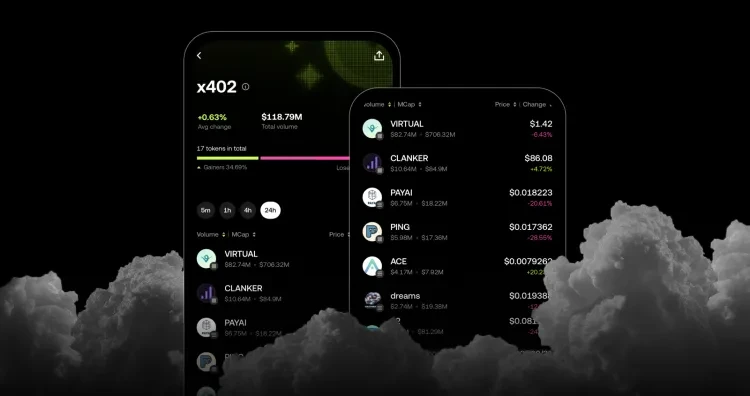
To understand the economic context of these transactions, it helps to look at the underlying asset. Most x402 implementations use stablecoins like USDC to avoid volatility during the micro-transaction window.
How the x402 payment flow works
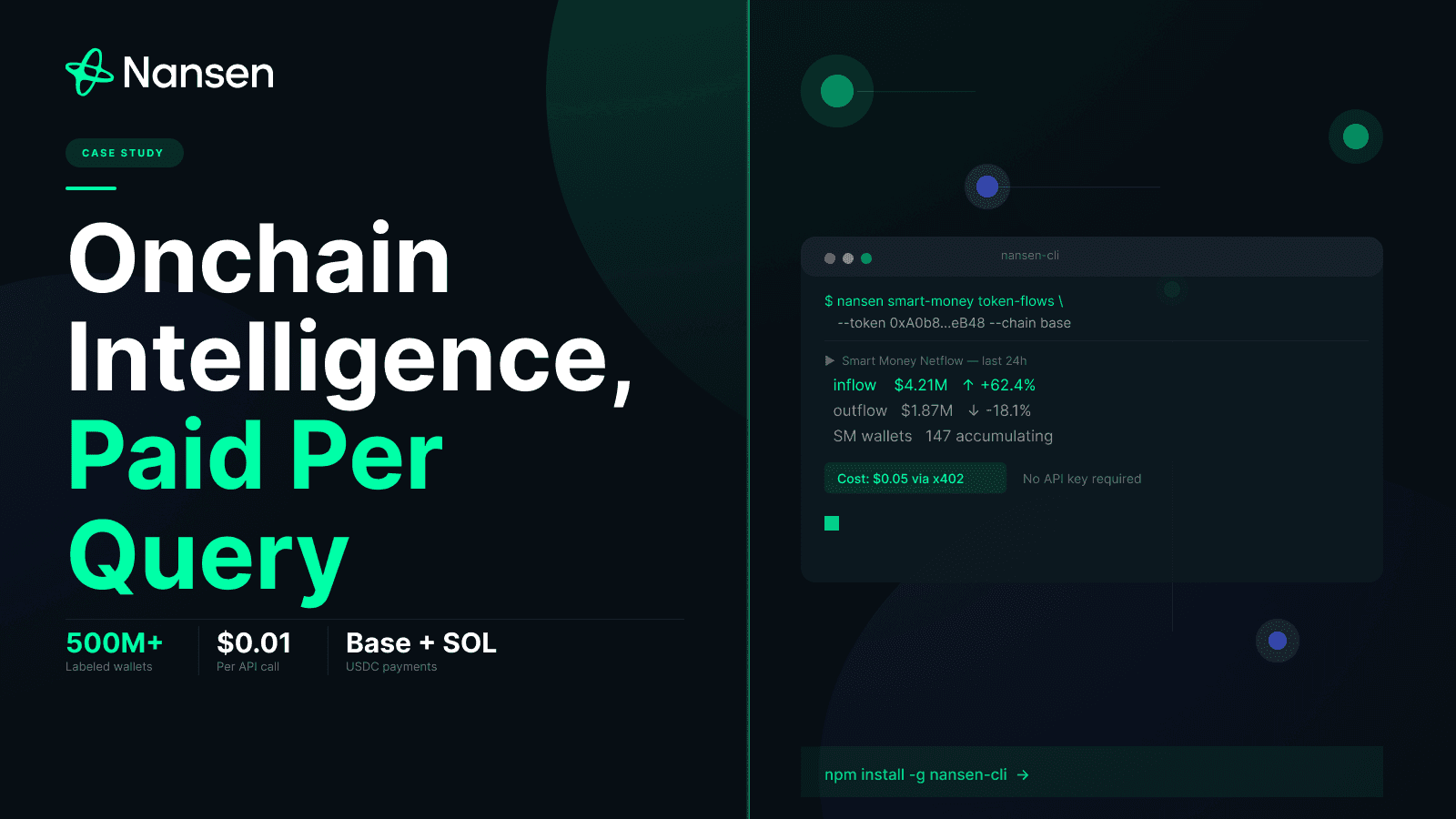
Integrating x402 endpoints for AI trading signals shifts the payment logic from pre-funded wallets to on-demand settlement. When an AI agent requests a signal, the server evaluates the request against the x402 standard. If the account lacks sufficient funds or the transaction hasn't been verified, the server doesn't block the request with a generic error. Instead, it returns an HTTP 402 Payment Required status. This response includes a Pay header containing the precise payment instructions: the amount, the asset (usually USDC), and the destination address on the Base network.
The agent's runtime parses this header and initiates a transaction. It sends the required USDC to the specified address. This step is critical for trading signals because latency matters; the agent must pay quickly to access real-time data. Once the transaction is broadcast to the Base blockchain, the agent retries the original request, this time attaching the transaction hash or proof of payment in the Authorization header.
A facilitator—often a service like Coinbase Developer Platform or a dedicated x402 verifier—monitors the Base chain for this transaction. It checks the hash against the payment details in the Pay header. Once the facilitator confirms the transaction is settled and irreversible, it signals the server to grant access. The server then delivers the AI trading signal data. This flow ensures that payment happens exactly when the resource is consumed, removing the need for complex subscription management systems.
To understand the financial context of these transactions, it helps to look at the stablecoin being used. USDC on Base is the primary settlement layer for most x402 integrations, chosen for its speed and low cost. The value of these micro-transactions fluctuates with the broader crypto market, making real-time price awareness essential for accurate signal pricing.
The AI agent sends a request to the trading signal endpoint. The server checks for valid payment credentials. If none are found, it responds with HTTP 402 and a Pay header detailing the USDC amount and Base network address.
The agent parses the Pay header and executes a smart contract transaction. It sends the exact USDC amount to the designated wallet on the Base blockchain. This step ensures the payment is public, verifiable, and irreversible.
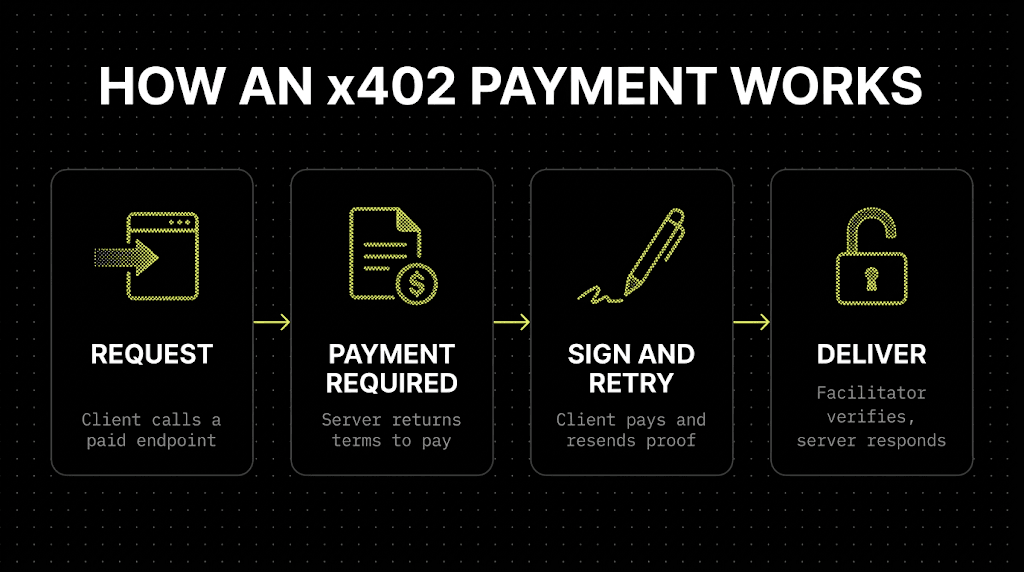
A facilitator service monitors the Base chain for the transaction hash. It validates that the amount, asset, and recipient match the Pay header requirements. This verification step is crucial for preventing double-spending and ensuring the signal provider gets paid.
Upon confirmation from the facilitator, the server accepts the agent's retry request. The Authorization header containing the proof of payment is validated, and the server delivers the real-time AI trading signal data to the client.
This sequence creates a frictionless economy for AI agents. They don't need to maintain credit cards or pre-funded accounts. They simply pay for what they use, when they use it. For developers building x402 endpoints for AI trading signals, this means focusing on the protocol's payment headers rather than traditional billing infrastructure.
Build the Signal Endpoint
To turn an AI trading signal into a billable asset, you need to structure your API endpoint to respect the x402 protocol. This isn't just about adding a payment button; it's about changing how your server responds to requests. When an AI agent or a client calls your endpoint, the server must be able to negotiate payment before delivering the data.
The core mechanic relies on the HTTP 402 status code. Unlike a standard 200 OK or a 401 Unauthorized, a 402 response tells the client exactly what is needed to use the resource. For AI trading signals, this means your endpoint should return a 402 with specific headers detailing the payment requirements. The client—whether it's a sophisticated trading bot or a simple script—must process these headers, sign a transaction, and send the payment before the server releases the signal data.
According to Coinbase's documentation, the integration involves returning specific headers that define the payment amount, the asset (typically USDC on Base), and the settlement details. This creates a standard way for servers to charge for API calls, allowing AI agents to pay for real-time market data automatically. The protocol essentially turns your API into a payment gateway, ensuring that every signal delivered is compensated without manual intervention.
Header Requirements and Response Formatting
When your endpoint detects a request that requires payment, it should return an HTTP 402 status code. This response must include headers that specify the payment details. The x-402-amount header indicates the cost of the signal, while x-402-asset defines the cryptocurrency to be used. For most trading applications, this will be USDC on the Base network, providing stability and low transaction fees.
The client interprets these headers to initiate a payment transaction. Once the payment is verified on-chain, the server can then return the actual trading signal data. This flow ensures that you are not giving away valuable market insights for free. It also allows you to scale your API without worrying about payment fraud or chargebacks, as the payment is settled in stablecoins before the data is released.
Handling the Payment Verification
The final piece of the puzzle is verifying that the payment was actually made. Your endpoint needs to check the blockchain for the transaction associated with the request. Once the payment is confirmed, the server can proceed to deliver the trading signal. This verification step is critical to prevent unauthorized access to your data.
By following these steps, you can build a robust endpoint that integrates seamlessly with the x402 protocol. This approach not only monetizes your AI trading signals but also aligns with the growing trend of machine-to-machine payments. As AI agents become more prevalent in trading, having an x402-compliant endpoint will give you a competitive edge.
How x402 facilitators verify payments
Building an x402 endpoint for AI trading signals requires handling on-chain payment verification. While you could manage this logic yourself, most developers use facilitators like Eco or Coinbase CDP to handle the complexity. These services act as intermediaries that verify transactions and confirm payments, allowing your server to focus on delivering accurate market data rather than managing blockchain state.
When an AI agent requests a trading signal, your server responds with an HTTP 402 status code containing payment requirements. The agent then sends USDC on Base. The facilitator monitors the blockchain, confirms the transaction, and signals your endpoint to release the data. This flow ensures that payments are settled before the AI receives the trade signal, preventing unpaid requests.
Comparison of x402 facilitators
Choosing the right facilitator depends on your infrastructure needs. Eco and Coinbase CDP offer different approaches to verification and settlement speed.
| Facilitator | Primary Chain | Settlement | Integration Complexity |
|---|---|---|---|
| Eco | Base | Real-time | Low |
| Coinbase CDP | Base | Near real-time | Medium |
| Self-hosted | Base | Manual/Custom | High |
Eco is often the preferred choice for rapid integration because it provides a streamlined API for verification. Coinbase CDP offers robust infrastructure but may require more setup for custom trading bots. Both support USDC on Base, which is the standard for x402 transactions. By leveraging these tools, you can integrate x402 endpoints for AI trading signals without building a dedicated blockchain verification layer.
Common integration pitfalls
Building an x402 endpoint for AI trading signals requires more than just slapping a paywall on an API. Developers often stumble on the specifics of the protocol mechanics, particularly around HTTP status codes and payment verification. If your server doesn't strictly adhere to the x402 specification, AI agents will fail to pay, and your trading data won't generate revenue.
Wrong HTTP Status Codes
The most immediate failure point is the response code. x402 is built on HTTP 402 Payment Required. If your endpoint returns a 401 Unauthorized or 403 Forbidden when payment is missing, compliant AI agents will not recognize it as a payable resource. They expect the 402 status to trigger their payment logic. Ensure your server returns 402 with a valid Payment-Required header that includes the payment instructions.
Ignoring Retry Logic
Blockchain transactions are not instant. After an AI agent sends a payment, there is a confirmation delay. If your endpoint rejects the request immediately after the payment is initiated, you lose the trade. Implement robust retry logic that checks the facilitator's webhook or on-chain status before granting access. Do not assume immediate settlement.
Checklist for x402 Endpoints
-
Verify 402 response format matches the spec.
-
Test agent payment flow with a test wallet.
-
Confirm facilitator webhook handling for settlement.
-
Ensure stablecoin compatibility (USDC on Base).
No comments yet. Be the first to share your thoughts!