x402 endpoints for ai trading signals
Using x402 endpoints for AI trading signals shifts how agents handle market data. Instead of relying on free, rate-limited APIs, agents pay micro-transactions for real-time data. This model prevents abuse and ensures that high-frequency data feeds remain available for paying users.
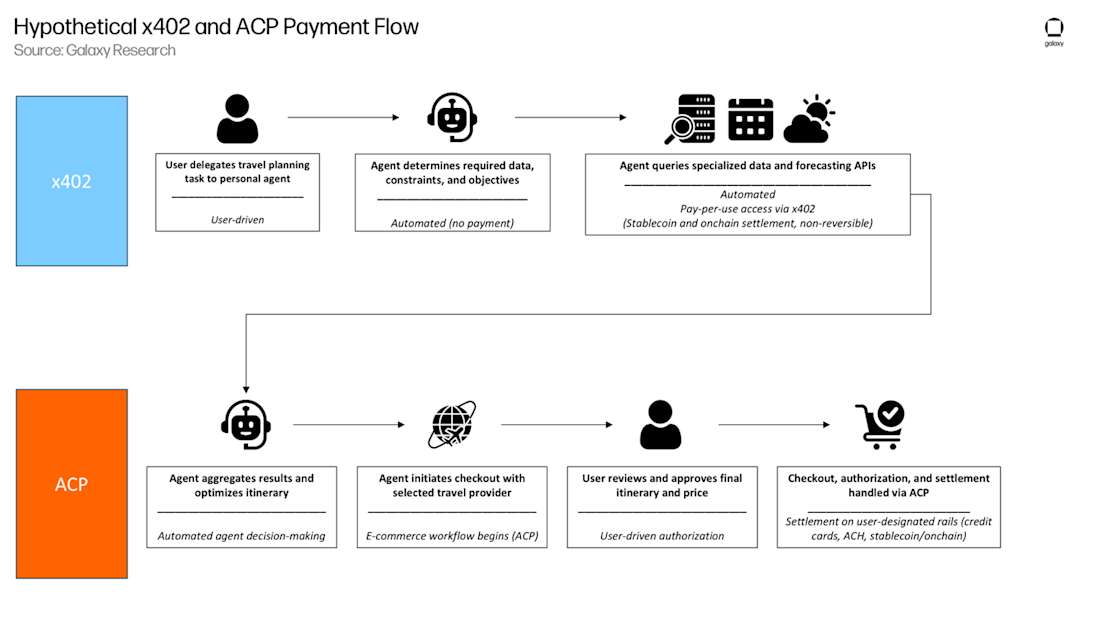
The standard defines how payments trigger data access. An agent sends a payment to the endpoint, receives a token, and uses that token to request live market signals. This process is automated, removing the need for manual API key management or subscription renewals.
However, this approach introduces latency. The payment verification step adds milliseconds to each request. For high-frequency trading, this delay matters. You must test your endpoint's response time under load to ensure it fits your strategy's requirements.
The x402 Bazaar helps you find these services. It is a discovery layer where developers list their x402-enabled data feeds. You can search for specific trading signals, compare prices, and verify the service's reliability before integrating it into your agent's infrastructure.
Evaluating x402 Endpoints for AI Trading
Integrating x402 endpoints into an AI trading infrastructure shifts the friction from manual approval to protocol-level verification. Before deploying autonomous agents, you must evaluate specific tradeoffs between latency, security overhead, and capital efficiency. The following comparison highlights the concrete factors that determine whether a specific x402 implementation suits high-frequency trading or slower, high-value signal aggregation.
| Factor | Latency Impact | Security Model | On-Chain Cost |
|---|---|---|---|
| Direct On-Chain Settlement | High (Block Confirmation) | Immutable | Variable (Gas Fees) |
| Off-Chain Verification + Claim | Low (Sub-Second) | Dependent on Node | Minimal |
| Escrow-Based x402 | Medium (Lock Time) | High (Smart Contract) | Moderate (Deployment) |
| Bazaar-Discovered Services | Variable (Discovery) | Reputation-Based | Discovery Fees |
The choice between direct on-chain settlement and off-chain verification with claims defines your risk profile. Direct settlement offers immutable proof of payment but introduces block confirmation delays that can erase arbitrage opportunities. Off-chain verification provides speed but requires trust in the node's integrity, making it suitable only for lower-risk signal aggregation.
Cost efficiency extends beyond gas fees. Services discovered through the x402 Bazaar often include discovery fees or reputation premiums. While these add marginal cost, they provide a layer of vetting that reduces the risk of interacting with malicious or unreliable endpoints. For trading agents, this tradeoff between speed and verified reliability is often the deciding factor in endpoint selection.
Finally, consider the capital efficiency of your escrow arrangements. x402-secure endpoints designed for autonomous agents integrate pre-payment risk checks that can hold funds in escrow until signal validation is complete. This prevents capital from being locked indefinitely during network congestion but requires careful tuning of timeout parameters to avoid missed trading windows.
Choose the next step
2026 guide: Integrating x402 Endpoints for AI Trading Signals to Automate Agent-Commerce Infrastructure works best as a clear sequence: define the constraint, compare the realistic options, test the tradeoff, and choose the path with the fewest hidden costs. That order keeps the advice usable instead of decorative. After each step, pause long enough to check whether the recommendation still fits the reader's actual situation. If it depends on perfect timing, unusual access, or a best-case budget, include a simpler fallback.

Watch Out for Weak x402 Endpoints
Integrating AI trading signals requires more than just finding an endpoint that returns data. The real risk lies in the reliability of the payment layer and the accuracy of the signal itself. Many developers assume that because an endpoint accepts x402 payments, it is secure or profitable. This is a dangerous misconception.
Common Mistakes in Selection
Ignoring Latency Costs Trading signals are time-sensitive. An x402 endpoint that requires complex multi-step payment verification will introduce latency that destroys your edge. Always check the response time of the payment handshake, not just the data payload.
Overlooking Rate Limits Many free or low-cost x402 endpoints throttle requests aggressively. If your agent sends 100 signals per minute, a 10-request-per-minute limit will cause missed trades. Verify the rate limits before committing to a provider.
Skipping the Bazaar Verification The x402 Bazaar is the discovery layer for these services. If an endpoint isn't listed or verified there, it may be a dead end or a scam. Use the Bazaar to validate that the service is active and has a history of successful transactions.
Red Flags to Avoid
- No Transparent Pricing: If the endpoint doesn't clearly state the cost per signal or per API call, walk away. Hidden fees can erode your trading profits.
- No SLA (Service Level Agreement): Trading systems need uptime guarantees. If the provider doesn't offer an SLA, you're on your own when the market is volatile.
- Vague Documentation: Good endpoints have clear, machine-readable docs. If you can't programmatically integrate with it easily, it's not built for agents.
How to Vet an Endpoint
- Check the x402 Bazaar: Verify the endpoint is listed and has positive feedback.
- Test with Small Amounts: Send a few test payments to ensure the transaction clears and the data is accurate.
- Monitor Latency: Measure the time from payment to data receipt. It should be under 200ms for high-frequency trading.
- Review the Code: If the endpoint is open-source, audit the code for security vulnerabilities.
By avoiding these weak options and common pitfalls, you can build a more robust and profitable AI trading infrastructure.
No comments yet. Be the first to share your thoughts!