Why agents need x402 for signals
Autonomous AI agents face a fundamental roadblock when trying to consume real-time market data: they cannot open bank accounts. Traditional API billing relies on credit cards, recurring subscriptions, and human verification—infrastructure that is completely invisible to software bots. If an agent needs to fetch a trading signal every five minutes, the friction of manual payment setup makes the idea impractical. The current model forces agents to either hoard data inefficiently or rely on human intermediaries to process transactions, breaking the loop of true autonomy.
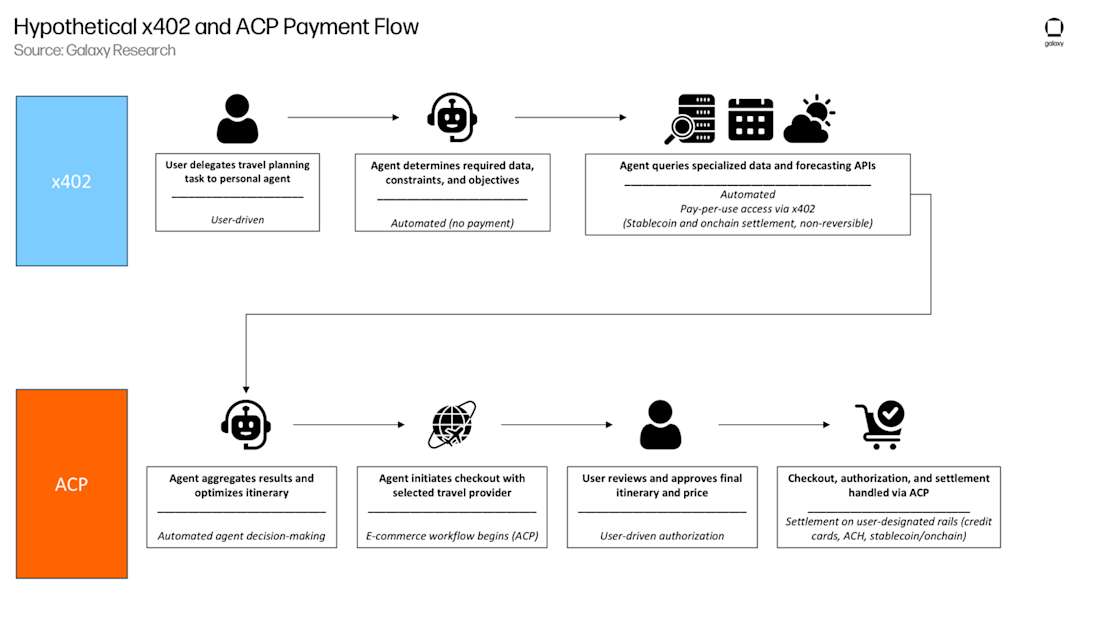
x402 solves this by treating internet endpoints as paywalls that accept direct on-chain payments. This standard allows an AI agent to pay for a signal using only its own wallet and the appropriate stablecoin, without needing a user account. As the x402 ecosystem notes, this protocol is specifically designed for transactions involving autonomous agents, enabling them to transact directly and transparently x402.org. This removes the administrative overhead that currently stifles agentic commerce.
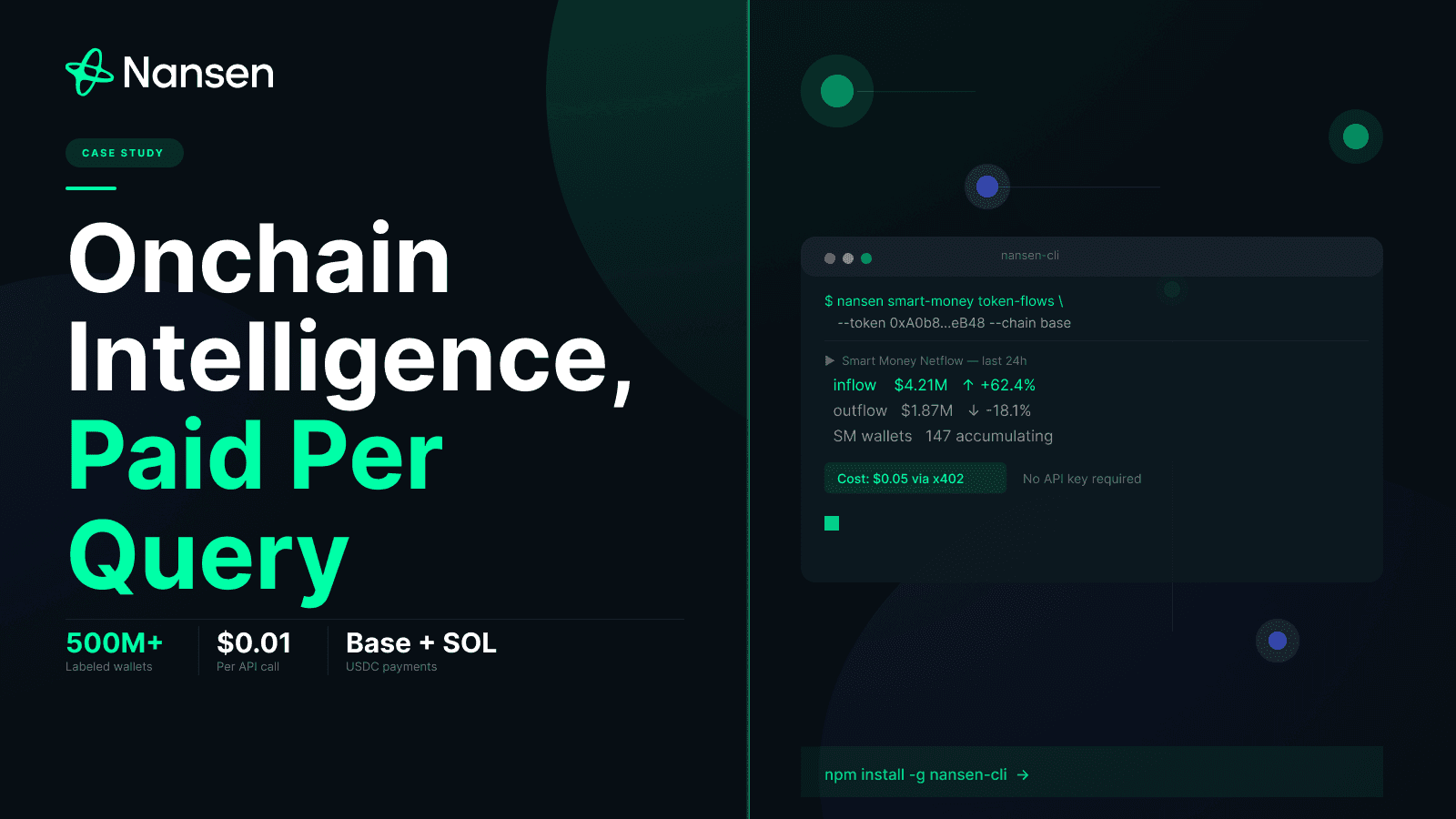
The economic shift here is significant. Instead of flat monthly fees that may be too expensive for low-margin signals or too cheap for high-value data, x402 enables micropayments. An agent can pay a fraction of a cent for a single, high-precision trading signal. This pay-per-use model ensures that costs align exactly with the value received, allowing agents to operate with the same financial efficiency they apply to their trading logic. By integrating these pre-payment checks, the protocol ensures that data providers are compensated instantly, creating a sustainable economy for AI-driven finance.
Setting up the x402 seller endpoint
Integrating x402 into your trading signal API shifts your payment model from manual invoicing to automated, machine-readable transactions. Instead of relying on traditional gateways, your endpoint validates cryptographic proofs directly, allowing AI agents and human clients to pay instantly for data access. This setup is foundational for any service looking to accept autonomous payments at scale.
1. Install the x402 SDK
Start by adding the official x402 SDK to your project dependencies. This library provides the core utilities needed to parse incoming payment proofs and manage the state of your API endpoints. It handles the heavy lifting of cryptographic verification, ensuring that only valid proofs are accepted before your service returns sensitive trading data. Most modern frameworks have compatible packages that integrate directly into your middleware stack.
2. Configure Your API Middleware
Next, wrap your trading signal endpoints with x402 middleware. This middleware intercepts incoming requests and checks for the x-x402-payment header. If the header is missing or invalid, the middleware returns a 402 Payment Required status, blocking access to the data. This step ensures that every request is backed by a verified transaction, creating a secure barrier between your API and unpaid users. You can configure specific routes to require payment while leaving public documentation endpoints open.
3. Handle Payment Verification
Once the middleware is in place, focus on the verification logic. The SDK validates the cryptographic proof against the blockchain, confirming that the payment was actually made and is unspent. For AI trading signals, this process must be fast to avoid latency in data delivery. Ensure your server responds quickly to verification results, granting access immediately upon success. If verification fails, return a clear error message that helps buyers correct their transaction without guessing.
4. Monitor and Log Transactions
Finally, implement robust logging for all payment events. Track successful payments, failed verifications, and retry attempts. This data is crucial for debugging integration issues and understanding your revenue streams. Since x402 transactions are on-chain, you can also cross-reference your logs with blockchain explorers for added transparency. Consistent monitoring helps you identify patterns, such as frequent retry failures, which might indicate user confusion or network congestion.
Add the official x402 SDK to your project to handle cryptographic verification and payment parsing.
Wrap your API routes with middleware that checks for the x-x402-payment header and blocks unpaid requests.
Ensure the SDK validates the proof against the blockchain quickly, granting access only to verified transactions.
Track all payment events for debugging and revenue analysis, cross-referencing with on-chain data.
Pricing models for signal data
Trading signals are data, but they are data with a shelf life. Unlike a static dataset, a real-time alpha signal loses value the moment it is shared or executed. This urgency changes how you price access. You need models that reward speed and penalize latency, ensuring that the buyer gets fresh edges and the seller captures the premium of immediacy.
In an agent-driven economy, the friction of payment disappears. x402 allows AI agents to pay per request without human intervention, which opens up granular pricing strategies that were previously too administratively heavy. You can move away from rigid monthly subscriptions toward flexible, usage-based models that align cost directly with value received.
Per-call billing for low-volume traders
Per-call billing charges a fixed fee for each API request. This is the simplest model to implement and understand. It works well for retail traders or small bots that only need a few signals a day. The agent checks the endpoint, pays the micro-transaction, and receives the data. There is no commitment, making it low-risk for the buyer.
However, per-call pricing can become expensive for high-frequency strategies. If a bot triggers ten calls per minute, the cumulative cost adds up quickly. It also requires the agent to handle payment logic for every single interaction, which can introduce latency if the payment network is congested. For most, this model serves as an entry point rather than a long-term solution.
Subscription tiers for consistent access
Subscription models charge a flat fee for unlimited or capped access over a set period. This is the standard for traditional financial data providers like Bloomberg or Refinitiv. For AI agents, a subscription simplifies budgeting. The agent knows it has "credit" to spend and doesn't need to manage individual payment transactions for every signal.
Tiers allow you to segment your market. A basic tier might offer delayed data or limited requests, while a premium tier grants real-time access and higher throughput. This structure encourages users to upgrade as their trading volume grows. It also provides predictable revenue for the signal provider, which is essential for maintaining the infrastructure required to generate high-quality data.
Hybrid models for maximum flexibility
The most robust approach often combines both methods. You might offer a base subscription that includes a certain number of calls, then charge a small per-call fee for excess usage. This hybrid model balances predictability with scalability. It prevents abuse from high-frequency bots while still allowing serious traders to access the data they need without hitting hard caps.
x402 makes these hybrid models seamless. The agent can automatically manage its subscription status and handle overage payments in real-time. This reduces churn because users only pay for what they use, and it ensures that high-value users are fairly compensated for their heavy usage. The payment protocol handles the complexity, letting you focus on the quality of the signals.
Comparing billing approaches
The table below contrasts traditional API billing with x402-enabled agent billing. The key difference lies in automation and friction. Traditional models often require manual updates or rigid contracts, while x402 allows for dynamic, programmatic adjustments.
| Model | Cost Structure | Friction | Agent Automation |
|---|---|---|---|
| Per-Call | Variable | Low | High |
| Subscription | Fixed | Medium | Medium |
| Hybrid | Mixed | Low | High |
| Traditional API | Fixed/Overage | High | Low |
When choosing a model, consider your user base. If you are targeting high-frequency trading bots, per-call or hybrid models with x402 are superior. If you are targeting slower, discretionary traders, subscriptions may feel more familiar and manageable. The technology supports both, but the economics favor models that align with the speed of the data.
Security and risk checks in x402
When you’re building an AI trading agent, security isn’t an afterthought—it’s the foundation. The x402 protocol was built specifically to handle transactions between autonomous agents, which means it needs more than just a simple payment gateway. It requires a system that can verify trust before a single dollar moves.
This is where x402-secure comes in. Unlike standard HTTP endpoints that just process requests, x402-secure integrates pre-payment risk checks directly into the transaction flow. Before your AI agent executes a trade or pays for a signal, the protocol verifies the legitimacy of the counterparty. This prevents your agent from being drained by malicious endpoints or unreliable data providers.
The beauty of this design is that it aligns incentives. Providers who want to be part of the x402 ecosystem know they must meet certain security standards. If they don’t, their endpoints get flagged or blocked before any payment is processed. This creates a self-policing network where trust is verified, not assumed.
For trading agents, this means you can focus on strategy rather than constantly monitoring for fraud. The security layer handles the heavy lifting, ensuring that every transaction is backed by a verified, secure endpoint. It’s not just about paying; it’s about paying safely.
Launch Checklist for x402 Sellers
Getting your trading signal API ready for x402 requires a few specific setup steps. Follow this checklist to ensure your endpoint can accept payments from AI agents and human clients alike.
- Register your API: Create an account on a supported payment layer like Coinbase Developer Platform and register your endpoint URL.
- Implement the x402 header: Configure your server to return a
200 OKwith ax-protocol: x402header when requested, along with the required payment instructions. - Verify payment logic: Test your endpoint with a small test transaction to ensure it correctly processes the payment before unlocking the data.
- Document your schema: Clearly define the data structure your API returns so buyers know exactly what they are paying for.
For detailed technical instructions, refer to the Quickstart for Sellers guide from Coinbase Developer Documentation.
What are x402 tokens and how do they work?
The term "x402 token" often confuses newcomers because it doesn't refer to a specific cryptocurrency like Bitcoin or Ethereum. Instead, x402 is an open, neutral standard for internet-native payments. It is designed to solve the "original sin" of the internet: the lack of a native way for clients and servers to pay each other directly.
When you see x402 referenced in trading or AI agent contexts, it usually means the endpoint is configured to accept payment via standard stablecoins (like USDC) or native chain tokens through this protocol. The "token" is simply the currency you use to settle the bill for the API call.
How the payment mechanism works
Here is how the x402 protocol typically handles transactions for AI trading signals:
This model shifts the economy from subscription-based access to pay-per-use. For AI trading bots, this is critical because it allows them to autonomously purchase data without human intervention. The agent holds a wallet, checks the price, sends the token, and receives the signal—all in seconds.
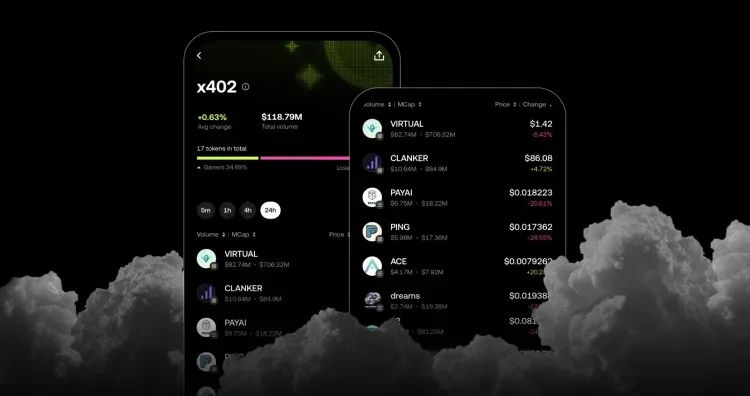
To understand the current market context for the stablecoins often used in these transactions, you can monitor real-time price action below.
No comments yet. Be the first to share your thoughts!