Why x402 fits trading signals
Traditional payment gateways introduce friction that AI agents cannot tolerate. When an AI model generates a trading signal, the latency between generating the data and receiving payment is often too high for micro-transactions. x402 solves this by embedding payment logic directly into the HTTP protocol. This allows AI agents to pay per request using stablecoins like USDC without requiring user accounts, human approval, or complex wallet integrations.
For trading signals, this means your API can accept USDC payments directly. The agent verifies the transaction on-chain before accessing the data. This removes the need for subscription management systems or credit card processing fees, which can eat up the margins of low-cost signals. The result is a frictionless flow where data and payment happen in a single, atomic step.
How the x402 handshake works
When your AI agent requests a trading signal, the server doesn’t just hand over the data. Instead, it initiates a specific handshake defined by the x402 protocol. This mechanism ensures that payment precedes access, creating a trustless flow for AI agents to pay for real-time market intelligence.
The process follows a strict sequence:
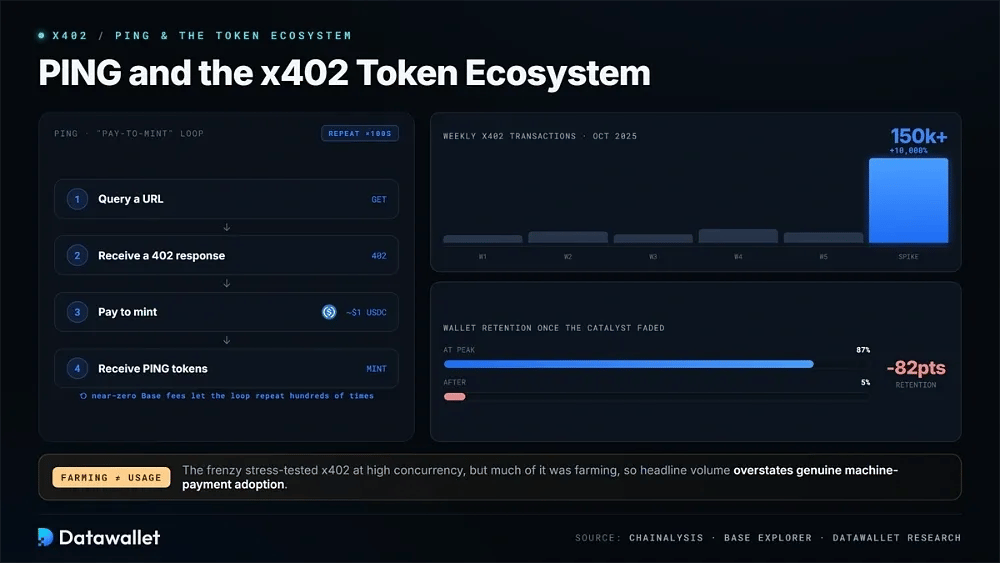
Your agent sends a standard HTTP GET or POST request to the endpoint. The server recognizes this as a paid resource and does not return the signal data. Instead, it halts the process to request payment.
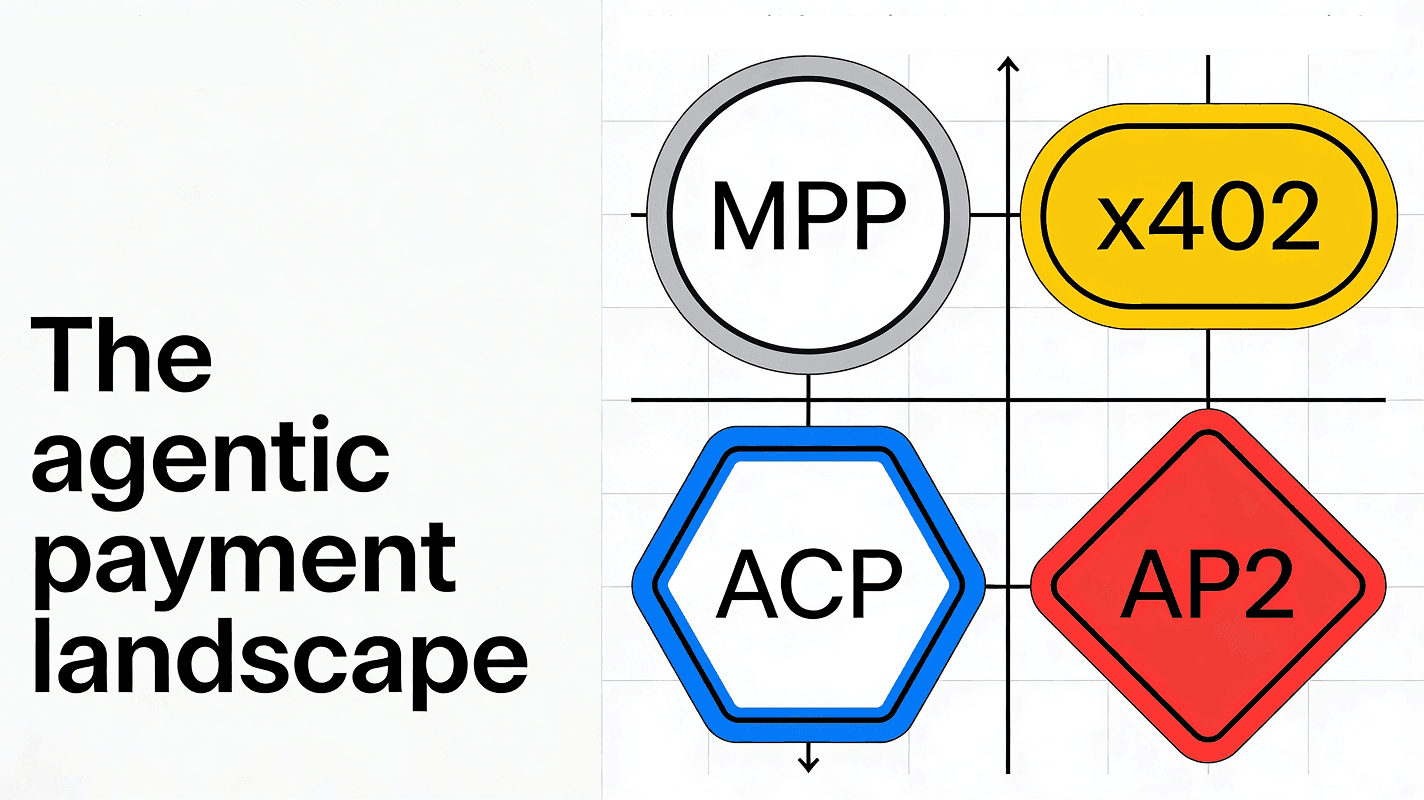
The server responds with an HTTP 402 status code. This is the core of the x402 protocol. The response body contains the payment instructions, including the amount due, the destination wallet address, and the specific blockchain network (usually Base or Ethereum) for the transaction.
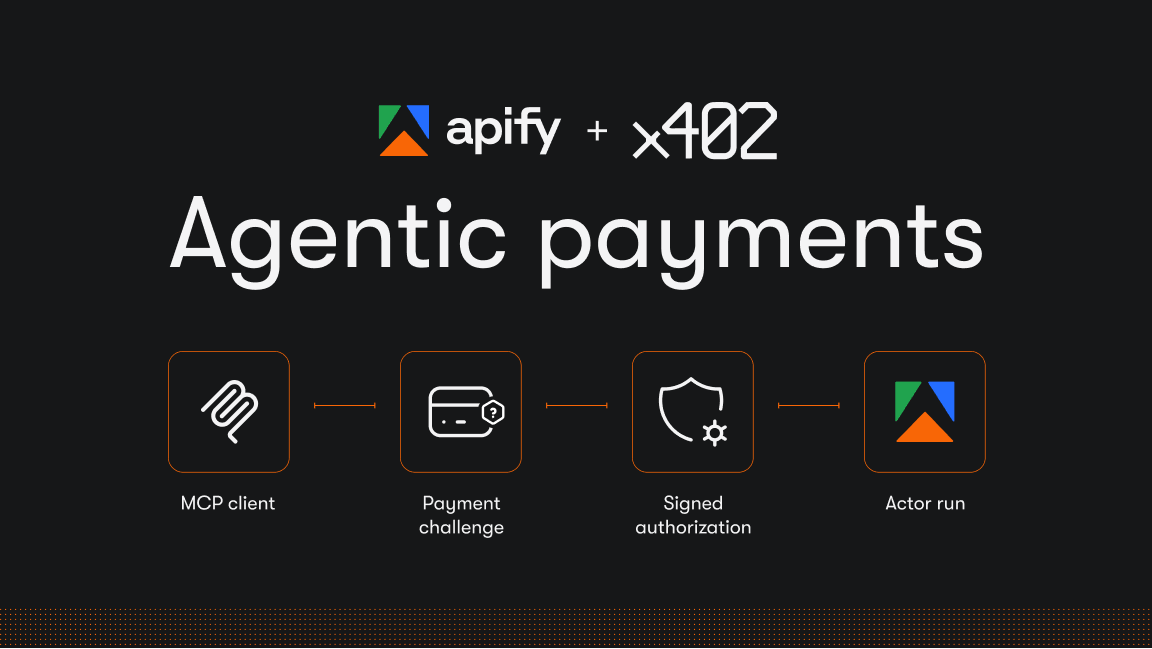
The AI agent, equipped with a wallet and USDC balance, executes the payment. It sends the required amount of USDC to the specified address. Because this is an automated agent, it handles the gas fees and transaction signing without human intervention.
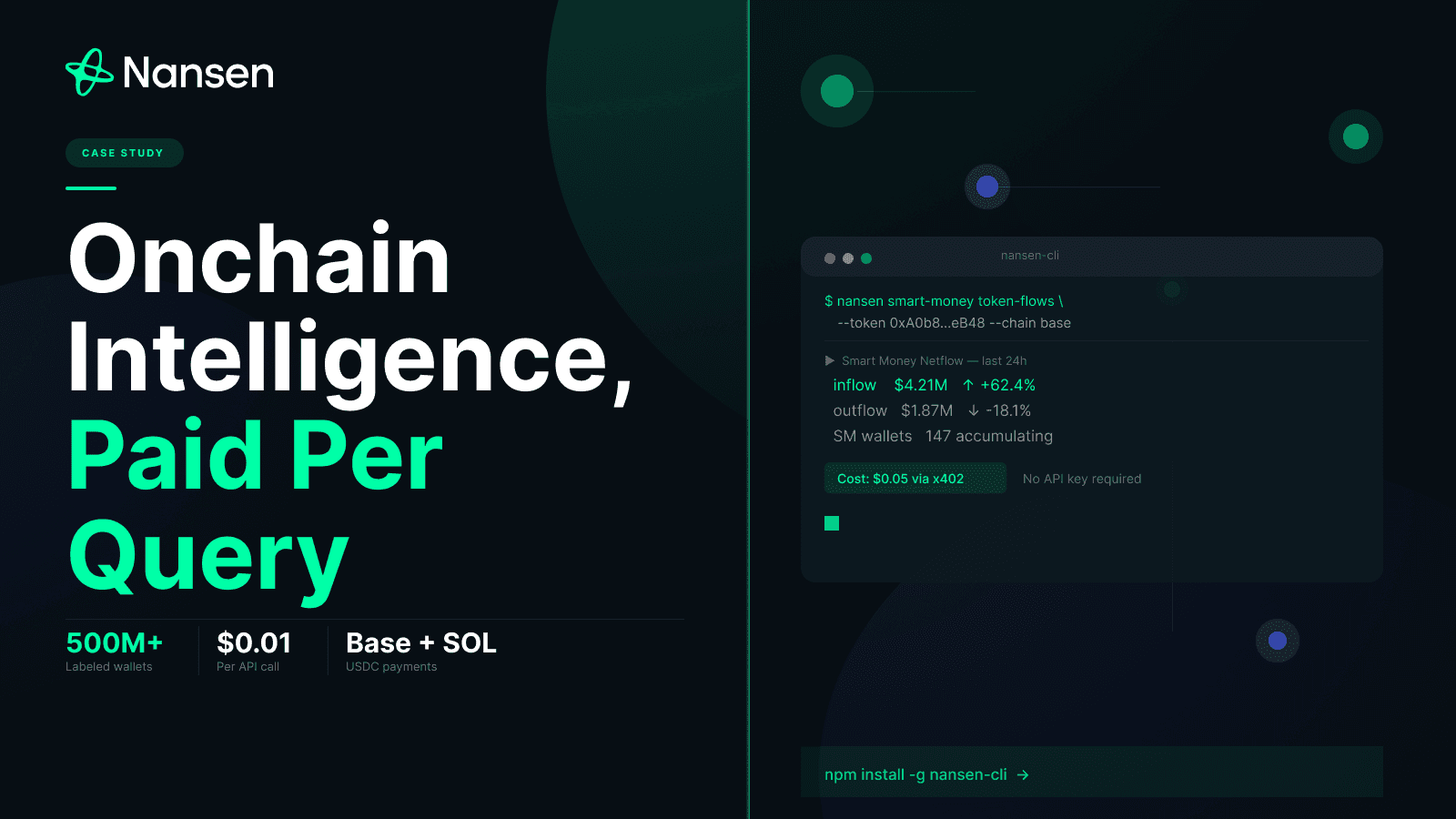
Once the payment is confirmed on-chain, the agent retries the original request. This time, the server verifies the transaction, attaches the payment proof to the request headers, and delivers the trading signal data in the response body.
This flow is critical for developers building autonomous trading systems. It shifts the burden of payment verification from the client to the protocol, ensuring that only paying agents access sensitive market data.
Integrating with CDP Bazaar
CDP Bazaar acts as the discovery layer for the x402 ecosystem. It allows AI agents and developers to browse, search, and verify x402-enabled services that are cataloged through the Coinbase Developer Platform. Instead of manually hunting for endpoints, your agent queries the Bazaar to find services that accept USDC payments on-chain.
To integrate, your agent first queries the Bazaar discovery endpoints. These endpoints return a list of available services, each with metadata including the endpoint URL, payment requirements, and service description. The agent filters these results based on its specific needs, such as latency, cost, or signal type.
Once a service is selected, the agent retrieves the endpoint details. The Bazaar ensures that the service is active and verified by the CDP Facilitator. This verification step is critical for security, as it confirms that the service is legitimate and ready to accept x402 payments.
After selecting a service, the agent can proceed with the standard x402 flow: sending the request and handling the payment. The entire process is designed to be seamless for AI agents, allowing them to autonomously discover and interact with paid services without human intervention.
The chart above shows the USDC/USD price action. This widget provides live data on the stablecoin parity, which is essential for understanding the transaction costs when your agent interacts with x402 services. Since x402 typically uses USDC for payments, monitoring its stability helps in estimating the real-world cost of each API call.
Handling Payment Retries
On-chain transactions are not instant, and network congestion is a fact of life for any AI agent operating on x402 endpoints. When your agent sends a USDC payment and the blockchain hasn’t confirmed the transaction yet, the endpoint will typically return a 402 Payment Required status. This isn’t a failure; it’s a signal to wait and try again.
Implementing a robust retry loop is essential for maintaining signal reliability. Instead of giving up immediately, your agent should check the transaction hash against the blockchain explorer. If the transaction is still pending, pause for a short interval—usually a few seconds—and then resend the request with the same payment proof. This approach prevents duplicate charges while ensuring the AI agent eventually receives the data it paid for.
However, you must set a hard timeout limit. If a transaction remains unconfirmed after a reasonable window (e.g., 30–60 seconds for L2s like Base, or several minutes for Ethereum mainnet), the agent should abort the current request. Continuing to retry indefinitely can lead to infinite loops and wasted gas fees if the initial payment was actually lost or rejected by the network. In these cases, the agent should log the error and attempt to fetch the signal again after a longer backoff period, ensuring it doesn’t overwhelm the endpoint with repeated requests.
This retry logic acts as a buffer between the deterministic world of code and the probabilistic nature of blockchain consensus. By handling these failures gracefully, your AI agents can operate autonomously without requiring human intervention to resolve common network delays.
Scaling agent commerce infrastructure
When you move from prototype to production, the biggest hurdle isn’t writing the AI logic—it’s handling the volume. High-frequency trading signals arrive in bursts, and your x402 endpoints need to process them without dropping packets or breaking the payment flow. Think of your infrastructure like a toll booth on a highway: if only one lane is open, traffic backs up instantly. You need multiple lanes (concurrent connections) and a fast scanner (automated verification) to keep the flow moving.
Start by decoupling the signal generation from the payment verification. Your AI model should output raw signals to a queue (like Redis or Kafka), while separate worker nodes handle the x402 payment requests. This ensures that a spike in trading activity doesn’t block your payment gateway. Use the Coinbase Developer Platform’s robust API infrastructure to handle the USDC settlements, letting it manage the blockchain congestion while your agents focus on market data.
To manage costs, monitor the gas and transaction fees closely. Use a live price widget to track USDC against USD, ensuring your signal pricing remains competitive even as market volatility shifts. If the cost of verification exceeds the value of the signal, your agent commerce model breaks. Keep your endpoints lean, stateless, and ready to scale horizontally.
Common x402 Integration Mistakes
Even with a clear spec, building x402 endpoints for AI trading signals often trips up developers. The protocol adds layers of payment logic to standard API calls, and skipping steps breaks the flow. Here are the most frequent errors and how to fix them.
Ignoring the 402 Status Code
The core of x402 is the 402 Payment Required response. If your endpoint returns a generic 400 or 500 error when payment is missing, AI agents won’t know to initiate a payment. They’ll just retry or fail. Always return 402 with the Payment-PaymentPointer header so the agent can find the payment method.
Skipping the Facilitator Step
Some developers try to handle USDC transfers directly on-chain for every small signal request. This is inefficient and expensive due to gas fees. Use a facilitator like Eco to handle the micro-transactions. Your endpoint should verify the facilitator’s proof, not process the blockchain transaction itself.
No Pre-Launch Checklist
Before going live, verify your endpoint handles edge cases. Use this quick checklist to ensure your x402 implementation is robust:
- Validate Payment Pointers: Ensure the
Payment-PaymentPointerheader is correctly formatted and points to a valid wallet or facilitator. - Test with Simplescraper: Use a tool like Simplescraper to send a test request and verify the
402response triggers correctly. - Check Gas Limits: If handling on-chain payments, ensure your gas limit covers the transaction cost for the specific network (e.g., Base, Ethereum).
- Log Failures: Implement detailed logging for failed payment verifications to debug issues without exposing sensitive wallet data.
No comments yet. Be the first to share your thoughts!