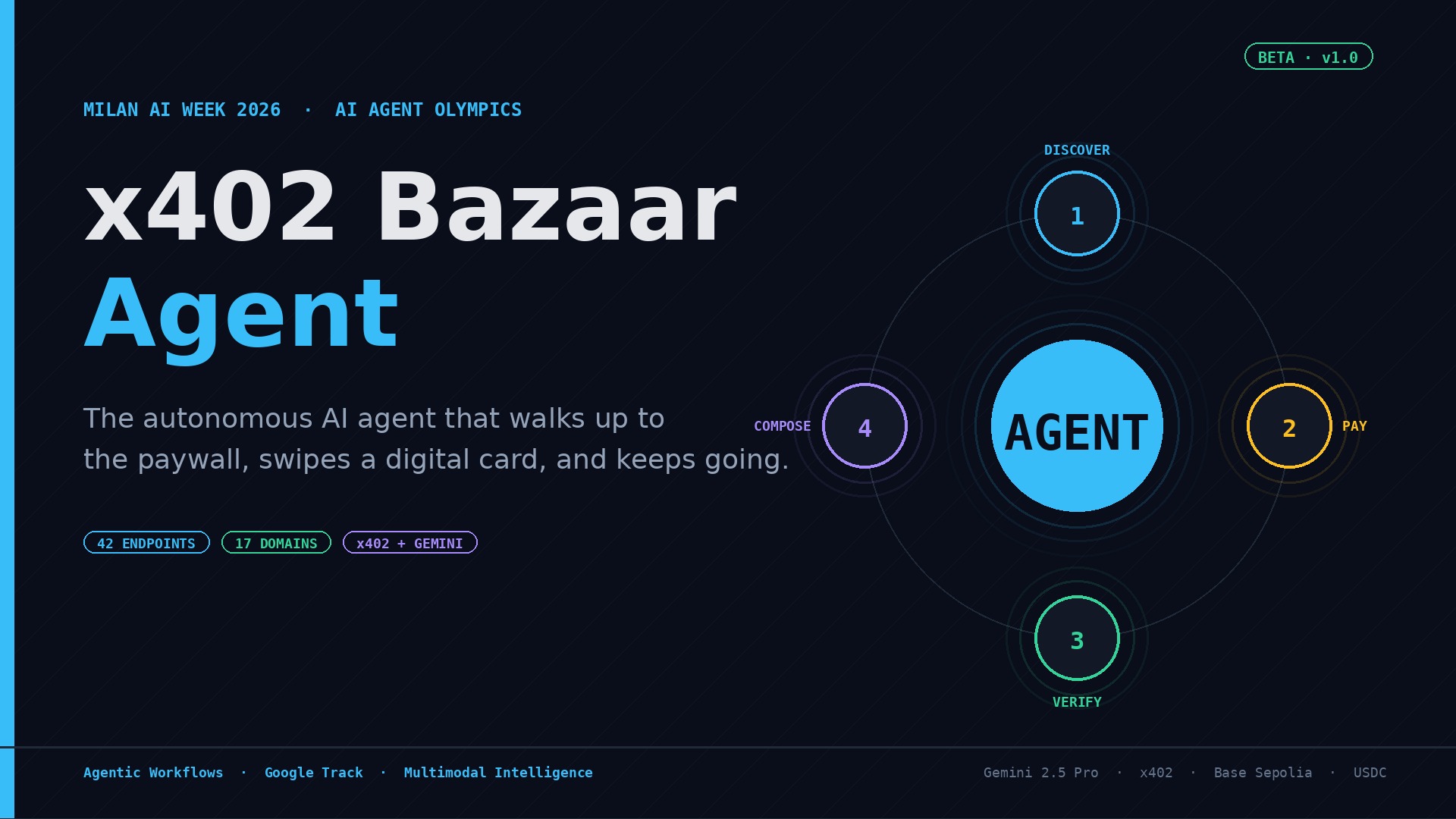
What x402 Enables for Signal Sellers
x402 is an HTTP-native payment protocol designed to let AI agents pay per request with stablecoins, requiring no accounts or human approval. This infrastructure shift removes the friction of traditional payment gateways, allowing signal sellers to monetize API endpoints directly.
The Mechanism
At its core, x402 standardizes how machines negotiate payment. When an AI agent requests a trading signal, the endpoint checks for a valid payment header. If the stablecoin payment is confirmed on-chain, the signal is delivered. This happens in milliseconds, creating a seamless flow for automated trading systems.
This approach eliminates the need for user accounts, credit card processing, or complex subscription management. Sellers can charge per signal, per minute, or per data point, creating flexible monetization models that align with how AI agents consume data.
Why Stablecoins Matter
Stablecoins are the preferred currency for x402 because they provide price stability for high-frequency transactions. Agents can execute trades and pay for signals without worrying about crypto volatility affecting their operational costs.
The protocol supports multiple blockchains, including Ethereum, Solana, and Base, allowing sellers to choose the network that best fits their latency and cost requirements. This flexibility is crucial for traders who need fast, cheap transactions to maintain profitability.
Impact on Signal Sellers
For signal sellers, x402 opens up a new market: automated, machine-to-machine commerce. Instead of targeting individual human traders, you can now integrate directly into AI trading bots. These bots can subscribe to your signals, pay automatically, and execute trades without human intervention.
This creates a recurring revenue stream that scales effortlessly. Each additional agent connecting to your endpoint generates revenue without increasing your support burden. The protocol’s simplicity means you can focus on improving your signal quality rather than managing payment infrastructure.
How the payment flow works
The x402 protocol turns standard HTTP into a payment rail. When an AI agent requests a trading signal endpoint, the server doesn't just block access—it provides a receipt. The response includes a 402 Payment Required status code along with specific payment details, such as the recipient's wallet address and the exact USDC amount owed. This transforms a simple API call into a verifiable transaction.
The agent then executes the payment. Using its connected wallet, the agent sends USDC to the specified address. This step is critical because it ensures the seller is compensated before the data is revealed. The transaction is recorded on the blockchain, providing an immutable proof of payment that the agent can later present to the server.
Once the payment is confirmed, the agent retries the original request. This time, it attaches the transaction hash or proof of payment in the headers. The server validates the proof against the blockchain. If the payment is legitimate and matches the required amount, the server returns the actual trading data in a 200 OK response. If the proof is missing or invalid, the 402 loop continues.
This flow ensures that AI agents can autonomously purchase data without human intervention. By embedding payment logic directly into the HTTP response, x402 removes the need for third-party payment processors or subscription managers. The entire process is handled by the agent's code and the blockchain, making it fast, transparent, and secure.
Integrating x402 into Your API
Adding x402 to your seller-side API is less about rewriting your business logic and more about adding a payment-aware middleware layer. The goal is simple: before your endpoint returns data, it verifies that the buyer—whether a human or an autonomous AI agent—has transferred the required USDC amount. This turns your API into a self-sovereign revenue stream, removing the need for traditional gateways or subscription management platforms.
Wallet Setup and Configuration
The first step is establishing your merchant identity. You don’t need a complex treasury setup; a single wallet address is sufficient to receive payments. According to Coinbase’s official documentation, you’ll configure this wallet in your developer dashboard to act as the recipient for incoming transactions. This address becomes the destination for the USDC sent by buyers during the 402 Payment Required handshake.
You will also need to configure your API to recognize the specific headers required by the x402 protocol. This includes setting up the Payment-Protocol and Payment-Uri fields in your responses. These headers tell the buyer’s agent exactly where to send the funds and which network (typically Base or Ethereum) to use. Keeping this configuration static ensures that your API remains compatible with a wide range of x402-compatible clients.
Handling the 402 Response Code
The core mechanic of x402 is the HTTP 402 Payment Required status code. When an unauthenticated request hits your endpoint, instead of returning a 401 Unauthorized or 403 Forbidden, your API returns a 402 along with a Payment-Required header containing the amount due and the payment URI. This signals to the buyer’s agent that the resource is locked behind a payment wall.
Once the payment is confirmed on-chain, the buyer’s agent presents the transaction hash or a signed token to your API. Your middleware then validates this proof of payment. If valid, the API grants access to the requested data, such as AI trading signals, and returns a 200 OK status. This flow ensures that you are paid before any value is exchanged, eliminating the risk of non-payment for high-value data.
Choosing Blockchains and Tokens
The x402 protocol is not bound to a single network; it is designed to operate across multiple EVM-compatible chains. For AI trading signals, the choice of blockchain dictates the cost structure and the speed of settlement. While the protocol supports various tokens, USDC has emerged as the standard for agent commerce due to its stability and widespread liquidity.
When selecting a chain, you are balancing transaction costs against network reliability. Base offers a low-friction environment with minimal gas fees, making it ideal for high-frequency signal delivery. Ethereum provides deep liquidity and security but at a higher cost per transaction. The table below compares the two primary options for integrating x402 endpoints.
| Feature | Base | Ethereum |
|---|---|---|
| Primary Use Case | Low-cost, high-frequency signals | High-value, institutional settlements |
| Average Gas Fee | <$0.01 | $1.00 - $5.00+ |
| Transaction Speed | ~2 seconds | ~12-15 seconds |
| Agent Adoption | High (Eco, Coinbase) | High (DeFi primitives) |
| Settlement Token | USDC | USDC / ETH |
USDC is the preferred token for x402 transactions because it eliminates price volatility during the payment window. AI agents need to know exactly how much value they are receiving for a signal; using a volatile asset like ETH introduces pricing risk that complicates automated billing. USDC’s peg to the dollar ensures that the agent’s revenue is predictable and immediately usable.
Both Base and Ethereum support USDC natively, but the user experience differs. On Base, transactions are nearly free, allowing agents to charge micro-fees for real-time data. On Ethereum, the higher gas costs mean agents typically bundle signals or target higher-value enterprise clients. For most independent AI signal providers, Base offers the best balance of accessibility and cost efficiency.
Official documentation from Eco and Allium confirms that x402 is agnostic to the underlying chain. This flexibility allows developers to deploy agents on the network that best fits their target audience, rather than being locked into a single ecosystem.
Building for Autonomous Agents
When you design an x402 endpoint for AI trading signals, you are no longer just building an API; you are building a financial instrument that must be machine-readable. AI agents do not read marketing copy. They parse schemas, check gas costs, and verify uptime logs. If your endpoint requires human intervention to complete a transaction, you have lost the market.
For signal providers, this shift demands a new level of infrastructure reliability. An agent buying a signal stream will retry requests automatically, but it will not wait for a support ticket. Your uptime SLA becomes your primary selling point. If your node drops packets during high volatility, your signal becomes worthless, and your API key gets revoked by the agent’s runtime environment.
Documentation is equally critical. You must provide clear, machine-parseable definitions for every endpoint. This means specifying exactly how USDC is handled, what the gas limits are, and how errors are returned. The goal is to remove ambiguity so an agent can integrate your service in minutes, not days. As noted in the x402 ecosystem, these endpoints are built specifically for AI agents and DeFi traders who need frictionless, autonomous payments without manual approval steps.
To ensure your integration works as intended, run through this pre-launch checklist:
-
Wallet funded with sufficient USDC and gas
-
402 handler tested with simulated agent payloads
-
API documentation complete with schema examples
-
Gas limits set to prevent denial-of-service
By treating your API as a product for machines, you align your infrastructure with the expectations of the autonomous agents that will drive the next wave of trading volume.
No comments yet. Be the first to share your thoughts!